.png?width=1344&height=768&name=Adobe%20Express%20-%20file%20(1).png)

Understanding the Importance of Alignment in SaaS Success In the dynamic world of Software as a...
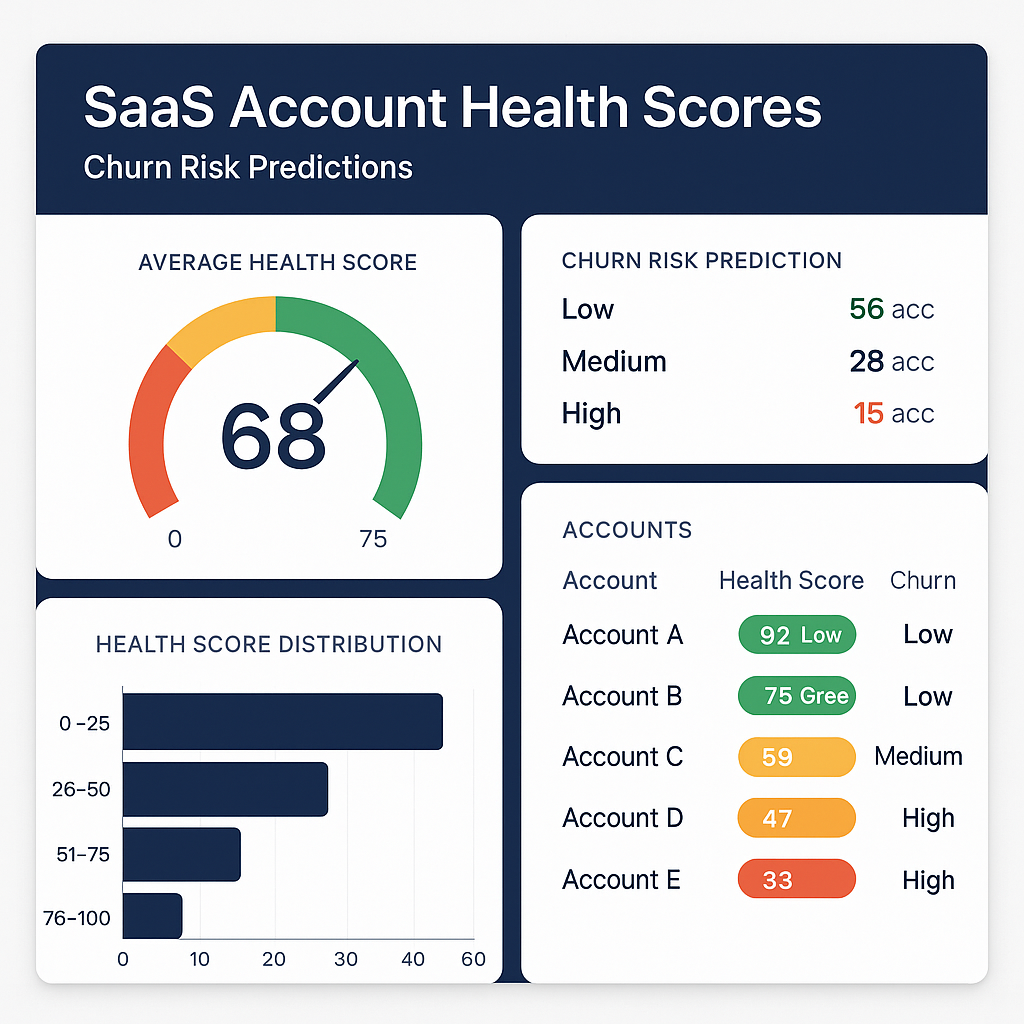
Unlock the power of predictive analytics to proactively reduce churn and drive SaaS growth with actionable churn prediction models tailored for customer success teams.
Understanding Churn: The Impact on SaaS Growth
Churn represents the percentage of customers who discontinue their subscription within a specific period. For SaaS businesses, churn is not just a metric—it’s a direct indicator of revenue loss and a signal of deeper issues in product adoption, customer experience, or value delivery.
High churn rates can severely hinder growth, as recurring revenue models rely on customer retention and expansion. Reducing churn has a compounding effect on growth: retaining customers is more cost-effective than acquiring new ones, and satisfied customers are more likely to expand usage and advocate for your solution. Understanding why customers churn is foundational to building an effective customer success program and ensuring the long-term health of your SaaS business.
Key Data Sources and Metrics for Churn Prediction
Reliable churn prediction begins with robust data collection. Key data sources include product usage logs, customer health scores, support ticket data, contract terms, and customer feedback. Each data source offers unique insights into user behavior, engagement, and satisfaction.
Critical metrics to monitor include Monthly Recurring Revenue (MRR), Net Promoter Score (NPS), feature adoption rates, login frequency, support response times, and usage drop-offs. Combining quantitative usage patterns with qualitative feedback enables a holistic view of customer risk, allowing teams to proactively intervene before churn occurs.
Types of Churn Prediction Models: From Simple to Advanced
Churn prediction models range from basic rule-based approaches to sophisticated machine learning algorithms. Simple models might flag accounts with declining logins or negative feedback, while more advanced models use statistical and machine learning techniques to identify complex patterns and risk factors.
Common approaches include logistic regression, decision trees, and ensemble models. Recent advancements leverage neural networks and AI to predict churn with high accuracy, taking into account numerous variables and interactions. Selecting the right model depends on your data maturity, resource availability, and business goals.
Implementing Churn Prediction in Your Customer Success Strategy
Integrating churn prediction into customer success workflows transforms reactive support into proactive engagement. Start by aligning your customer success team with data analysts to design actionable risk signals and playbooks. Ensure that predictions are delivered through easy-to-use dashboards and integrated into your CRM to support timely outreach.
Use churn predictions to segment accounts, prioritize high-risk customers, and tailor interventions—such as targeted onboarding, personalized training, or executive check-ins. Continuously measure the impact of your interventions to refine both your prediction model and your customer success tactics, ensuring continuous improvement in retention outcomes.
Overcoming Challenges: Data Privacy, Bias, and Human Touch
Churn prediction initiatives face challenges around data privacy, algorithmic bias, and maintaining a human connection. Ensure data compliance by adhering to industry regulations and clearly communicating data usage policies to customers. Mitigate bias by regularly auditing your models and including diverse data sources and perspectives.
While automation and predictive analytics are powerful, they should augment—not replace—human judgment and empathy. Empower your CSMs to interpret model outputs contextually and engage with customers authentically. Striking the right balance between technology and personal connection is key to building trust and reducing churn in the long term.