.png?width=1344&height=768&name=Adobe%20Express%20-%20file%20(1).png)
Module 9: CSM Compensation & Career Progression
Listen Audio 🎧
Audio Version - Listen to this module on-the-go. Perfect for commutes or multitasking. Duration: 35:51 minutes
What You'll Learn (Audio Version)
- Real CSM salary data across 8 global markets including US, UK, Ireland, Germany, Netherlands, and Poland
- How to decode compensation structures: understanding 70/30 vs 80/20 splits and OTE calculations
- Why the "CSM career ceiling" is a myth and how to break through it using documented impact
- Five proven lateral career paths from CSM (Sales, Product, RevOps, Solutions Engineering, Enablement)
- The Impact Value Matrix framework for documenting achievements that accelerate promotions
- Geographic arbitrage opportunities and how company stage impacts total compensation
- When to stay vs. when to move for maximum career acceleration
Watch Video 📹
Video Version - Watch the complete video tutorial with visual examples and demonstrations. Duration: 6:47 minutes
Read Article 📖
Learning Objectives:
- Understand CSM compensation structures across different markets and company stages
- Map potential career paths (vertical and lateral) with required skills
- Master the art of documenting and communicating impact for career advancement
- Build a personal brand that accelerates career growth
- Recognize when and how to transition to maximize career potential
Introduction
The Customer Success profession has evolved dramatically over the past decade, yet many CSMs struggle to understand their worth in the market and how to strategically advance their careers. This module provides a comprehensive guide to CSM compensation, career progression, and the often-unspoken strategies that separate those who advance from those who plateau.
Whether you're negotiating your first CSM role or planning your path to VP of Customer Success, understanding the compensation landscape and career dynamics is crucial. We'll explore real salary data, decode compensation structures, and most importantly, show you how to document and communicate your impact to accelerate your career progression.
The Cost of Not Understanding Your Worth
Without understanding compensation dynamics and career strategy, CSMs may:
- Accept below-market salaries and miss opportunities for 20-40% compensation increases
- Plateau in their roles without a clear path forward or visibility into advancement requirements
- Stay too long at companies with limited growth, missing critical market timing
- Fail to document their impact and get overlooked for promotions despite strong performance
- Miss lateral opportunities that could accelerate career progression
The Benefits of Strategic Career Management
Mastering career strategy and compensation negotiation enables you to:
- Negotiate confidently with real market data across 8 global markets
- Plan your career trajectory using proven vertical and lateral path frameworks
- Document your impact systematically to build a promotion-ready case
- Identify the right time to stay vs. move for maximum career acceleration
- Understand how company stage and geography impact total compensation packages
PART 1: CSM CAREER TRAJECTORIES & REALITIES
━━━━━━━━━━━━━━━━━━━━━━━━━━━━━━━━━━━━━━
Addressing the CSM Career Ceiling Myth
Many professionals believe Customer Success has a "ceiling" compared to Sales or Product roles. This is a dangerous misconception. The reality is that CS leaders are increasingly reaching C-suite positions as companies recognize that customer retention and expansion drive sustainable growth.
The truth about CSM career potential:
- Chief Customer Officers (CCOs) now exist at 40% of SaaS companies
- CS leaders command comparable compensation to Sales VPs at mature organizations
- The skills developed in CS (strategic thinking, data analysis, cross-functional leadership) are highly transferable
- Many successful founders and CEOs have CS backgrounds
Why some CSMs hit a ceiling (and how to avoid it):
- They don't document their impact - Meeting targets isn't enough
- They stay in their lane - Not leading cross-functional initiatives
- They don't build their brand - Invisible internally and externally
- They miss market timing - Staying too long in companies with limited growth
CSM as a Launchpad, Not Just a Destination
Customer Success provides unique advantages for career acceleration:
- 360-degree business exposure - You understand product, sales, marketing, and operations
- Direct revenue impact - Modern CSMs own retention and expansion metrics
- Executive relationships - Regular interaction with customer leadership
- Data-driven mindset - Analytics skills increasingly valuable across all roles
💡 Pro Tip: Treat your CSM role as an MBA alternative. You're getting paid to learn business operations, customer psychology, and revenue management simultaneously - leverage this for career optionality.
PART 2: CSM COMPENSATION ANALYSIS
Before diving into specific numbers, let's decode what CSM compensation packages typically include and how to evaluate them strategically.
━━━━━━━━━━━━━━━━━━━━━━━━━━━━━━━━━━━━━━
Understanding Compensation Components
Base Salary vs. OTE (On-Target Earnings)
What do 70/30 and 80/20 splits mean?
When you see "70/30 split," this refers to your base salary versus variable compensation ratio:
Example of 70/30 split on $100,000 OTE:
- Base Salary: $70,000 (guaranteed)
- Variable Compensation: $30,000 (at-risk, based on performance)
- You need to hit 100% of targets to earn full OTE
Example of 80/20 split on $100,000 OTE:
- Base Salary: $80,000 (more stability)
- Variable Compensation: $20,000 (less risk)
Which split is better?
- 70/30 = Higher earning potential but more risk (common in startups)
- 80/20 = More stability but less upside (common in enterprise)
- Consider your risk tolerance and financial obligations
💡 Pro Tip: When comparing offers, calculate the "worst case" (base only) and "best case" (OTE + accelerators). A 70/30 split at $120k OTE might be riskier than 80/20 at $110k if you value stability.
Variable Compensation Models
Understanding how your variable compensation works is crucial for maximizing earnings.
Common Metrics and Weights:
Net Revenue Retention (NRR): 40-60% of variable
- Target: Usually 95-105%
- Accelerators kick in above 100%
- Most heavily weighted metric in modern CS comp plans
Gross Revenue Retention (GRR): 20-30% of variable
- Target: Usually 90-95%
- Focus on minimizing churn
- Foundational metric before expansion
Expansion Revenue: 20-40% of variable
- Target: 10-20% of book of business
- Higher weight in growth-stage companies
- Often has uncapped upside potential
Customer Health/Satisfaction: 10-20% of variable
- NPS, health scores, adoption metrics
- Becoming less common as revenue metrics dominate
💡 Pro Tip: Negotiate for uncapped commission on expansion revenue. Many companies cap total variable at 120-150% of target, but you can often negotiate removal of caps on expansion specifically.
Best Practices for Evaluating Compensation Packages
- Calculate true earnings potential → Don't just look at OTE; understand attainment rates and historical payout percentages
- Evaluate equity realistically → Use 409A valuations and dilution assumptions, not fundraising announcements
- Compare total compensation → Include health benefits, 401k matching, stock grants, and professional development budgets
- Assess market positioning → Use Blind, Levels.fyi, and Repvue to validate offers against market data
- Consider geographic arbitrage → Remote opportunities can provide 30-50% effective raises by working for higher-paying markets
- Factor in career velocity → Sometimes a lower-paying role at a high-growth company accelerates long-term earnings
━━━━━━━━━━━━━━━━━━━━━━━━━━━━━━━━━━━━━━━━━━━━━━━━━━━━━━━━━━
Geographic Salary Ranges (2024-2025 Data)
United States Markets
Texas Split Market (Austin vs Dallas):
Austin's tech scene drives compensation 10-15% higher than Dallas:
Austin:
- Entry-Level: $70,000-$95,000 OTE
- Mid-Level: $90,000-$125,000 OTE
- Senior: $120,000-$165,000 OTE
- Manager: $150,000-$200,000 OTE
Dallas:
- Entry-Level: $60,000-$85,000 OTE
- Mid-Level: $80,000-$110,000 OTE
- Senior: $105,000-$145,000 OTE
- Manager: $135,000-$180,000 OTE
- Entry-Level CSM:
- Base: $55,000-$70,000
- OTE: $70,000-$95,000
- Mid-Level CSM:
- Base: $75,000-$95,000
- OTE: $95,000-$130,000
- Senior CSM:
- Base: $95,000-$125,000
- OTE: $125,000-$170,000
- CSM Manager:
- Base: $120,000-$150,000
- OTE: $160,000-$200,000
- Entry-Level CSM (0-2 years):
- Base: $65,000-$85,000
- OTE: $85,000-$115,000
- Typical split: 75/25
- Mid-Level CSM (2-5 years):
- Base: $85,000-$110,000
- OTE: $110,000-$145,000
- Typical split: 75/25 to 80/20
- Senior CSM (5-8 years):
- Base: $110,000-$140,000
- OTE: $140,000-$180,000
- Typical split: 70/30
- CSM Manager:
- Base: $130,000-$160,000
- OTE: $170,000-$215,000
- Typical split: 75/25
European Markets
- Entry-Level: £32,000-£42,000 ($40,000-$52,000)
- Mid-Level: £43,500-£58,000 ($54,000-$72,000)
- Senior: £58,000-£75,000 ($72,000-$93,000)
- Manager: £70,000-£95,000 ($87,000-$118,000)
US Tech Companies in UK typically add 20-30% to these ranges
Dublin's tech hub status drives competitive packages:
- Entry-Level: €35,000-€45,000 ($38,000-$48,000)
- Mid-Level: €45,600-€65,000 ($49,000-$70,000)
- Senior: €65,000-€85,000 ($70,000-$91,000)
- Manager: €80,000-€110,000 ($86,000-$118,000)
Structured compensation with strong benefits:
- Entry-Level: €40,000-€55,000 ($42,000-$58,000)
- Mid-Level: €48,000-€68,000 ($50,000-$71,000)
- Senior: €65,000-€85,000 ($68,000-$89,000)
- Manager: €75,000-€110,000 ($79,000-$116,000)
Note: 70% of German companies offer 13th month salary
Lower absolute salaries but growing tech scene:
- Entry-Level: €26,000-€35,000 ($28,000-$38,000)
- Mid-Level: €32,000-€42,000 ($35,000-$45,000)
- Senior: €42,000-€55,000 ($45,000-$59,000)
- Manager: €55,000-€75,000 ($59,000-$81,000)
Significant opportunity for geographic arbitrage:
- Entry-Level: 80,000-110,000 PLN ($19,000-$26,000)
- Mid-Level: 120,000-150,000 PLN ($29,000-$36,000)
- Senior: 150,000-200,000 PLN ($36,000-$48,000)
- Manager: 180,000-250,000 PLN ($43,000-$60,000)
English proficiency adds 25-35% premium
Company Stage Impact on Compensation
- Philosophy: Lower base, higher equity, broader responsibilities
- Base salary: 10-20% below market
- Equity: 0.1-0.8% for US, 0.05-0.5% for Europe
- Variable split: Often 70/30
- Benefits: Usually minimal
- Career growth: Fastest, but riskiest
- Philosophy: Market-rate base, moderate equity, specialized roles
- Base salary: At market rate
- Equity: 0.05-0.3% for US, 0.02-0.2% for Europe
- Variable split: Typically 75/25 or 80/20
- Benefits: Competitive
- Career growth: Structured but still rapid
- Philosophy: Highest base, limited equity, defined career paths
- Base salary: 10-20% above market
- Equity: RSUs instead of options
- Variable split: Conservative 80/20 or 85/15
- Benefits: Comprehensive
- Career growth: Slower but predictable
3. Career Progression Paths
Vertical Progression: Climbing the CS Ladder
CSM → Senior CSM → Principal CSM → CSM Manager → Director of CS → VP of CS → CCO
What It Takes to Progress (Beyond Just Hitting Targets)
Critical Truth: Meeting your targets is table stakes, not a differentiator. Everyone at the next level is hitting their numbers. What separates those who advance from those who don't?
1. Leading Cross-Functional Projects Simply doing your job well isn't enough. You need to demonstrate leadership beyond your core responsibilities:
- Own a company-wide initiative: Lead the implementation of a new CS tool across all teams
- Drive process improvements: Create playbooks that other CSMs adopt
- Bridge departmental gaps: Lead projects that require Sales, Product, and CS alignment
- Mentor other CSMs: Formally or informally develop team members
2. Documenting and Communicating Impact
This is where most high-performing CSMs fail. You must systematically document and communicate your value using data and business impact.
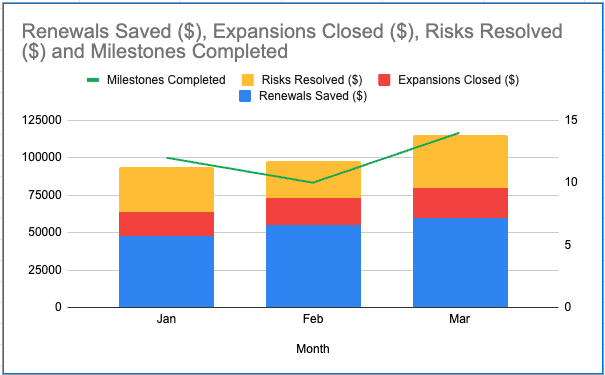
Use this matrix in EVERY 1:1 with your manager to:
- Track initiatives beyond core responsibilities
- Quantify business impact in dollars/hours/efficiency
- Create a promotion-ready portfolio
- Build your case with data, not opinions
How to use the Impact Value Matrix effectively:
- Update it weekly with new initiatives
- Include specific metrics and outcomes
- Review in every 1:1 - make it a standing agenda item
- Use it to build your promotion case document
- Share with skip-level managers during career conversations
💡 Pro Tip: Create a "Wins Document" in Google Docs and update it weekly. Include customer quotes, revenue saved/generated, and process improvements. When promotion time comes, you'll have a ready-made case with 12 months of documented impact.
3. Building Executive Presence
- Present in QBRs and board meetings
- Write strategic memos that get forwarded
- Speak at industry events
- Publish thought leadership content
Skills Needed at Each Level
- Manage strategic accounts independently
- Mentor junior CSMs
- Lead product feedback sessions
- Own a book of business worth $2-5M ARR
- Handle most complex/strategic accounts
- Influence product roadmap
- Design new CS processes
- Lead cross-functional initiatives
- Book of business: $5-10M ARR
- Manage team of 5-8 CSMs
- Own team quota ($10-30M ARR)
- Develop team members
- Strategic thinking beyond individual accounts
- Critical transition: From individual contributor to people manager
- Manage multiple teams or regions
- Own $30-100M ARR
- Budget responsibility
- Strategic planning
- Executive presence required
- Own entire CS function
- Report to C-suite
- Board presentation skills
- Revenue responsibility for retention/expansion
- Team of 20-50+
Lateral Career Paths: Expanding Your Options
1. CSM → Account Executive
Why it works: You understand the full customer lifecycle and have renewal/expansion experience
Transferable skills:
- Relationship building
- Commercial conversations
- Product knowledge
- Industry expertise
Gaps to fill:
- Prospecting and pipeline building
- Discovery and demo skills
- Closing new business
- Competitive positioning
How to make the transition:
- Shadow AEs on discovery calls
- Take on expansion opportunities in current role
- Get comfortable with rejection
- Build prospecting muscle
Timeline: 6-12 months Salary impact: Usually 10-20% increase in OTE, but less stable
Why it works: Deep customer insight and feature adoption expertise
Transferable skills:
- Customer empathy and use case knowledge
- Data analysis capabilities
- Cross-functional collaboration
- Success metrics understanding
Gaps to fill:
- Technical requirements writing
- Engineering collaboration
- Roadmap prioritization frameworks
- Market analysis
How to make the transition:
- Lead product feedback sessions
- Write detailed feature requests
- Partner closely with product team
- Take product management courses
Timeline: 12-18 months Salary impact: Often lateral or slight increase
Why it works: Process optimization and tool expertise
Transferable skills:
- CS platform knowledge
- Process design
- Metrics and reporting
- Automation mindset
Gaps to fill:
- Advanced data analysis
- System administration
- SQL/programming basics
- Project management
How to make the transition:
- Volunteer for tool implementations
- Design team dashboards
- Automate your own workflows
- Learn basic SQL
Timeline: 6-9 months Salary impact: Usually 5-15% increase
Why it works: Product expertise and consultative skills
Transferable skills:
- Deep product knowledge
- Problem-solving abilities
- Presentation skills
- Technical curiosity
Gaps to fill:
- Pre-sales methodology
- Technical depth
- Demo excellence
- RFP response process
How to make the transition:
- Become the technical expert on your team
- Support complex implementations
- Get certified in your product
- Shadow SE team members
Timeline: 9-12 months Salary impact: Often 15-25% increase
Why it works: Training experience and best practices knowledge
Transferable skills:
- Onboarding expertise
- Content creation
- Training delivery
- Process documentation
Gaps to fill:
- Curriculum design
- LMS management
- Program measurement
- Adult learning principles
How to make the transition:
- Lead team training sessions
- Create playbooks and guides
- Mentor new hires
- Measure training impact
Timeline: 6-12 months Salary impact: Usually lateral
Best Practices for Career Progression
- Document your impact systematically → Use the Impact Value Matrix weekly to track initiatives, metrics, and business outcomes
- Build cross-functional relationships → Lead projects with Sales, Product, and Engineering to demonstrate broader leadership
- Develop executive presence → Present in QBRs, write strategic memos, and communicate at the business level
- Create a personal brand → Publish content, speak at events, and build visibility in the CS community
- Know when to move → Stay 18-24 months minimum to show impact, but don't stay beyond 3-4 years without clear advancement
- Negotiate strategically → Use market data, document your value, and understand compensation structures before discussions
- Consider lateral moves tactically → Revenue Operations or Product Management can accelerate path to VP faster than pure CS track
━━━━━━━━━━━━━━━━━━━━━━━━━━━━━━━━━━━━━━
REAL-WORLD APPLICATION
Case Study: From Mid-Level CSM to Manager in 3 Years
Year 1: Building the Foundation (Mid-Level CSM at Series B)
- Salary: $95,000 OTE ($75k base + $20k variable)
- Started Impact Value Matrix tracking every initiative
- Led cross-functional project to redesign customer onboarding (reduced time-to-value by 40%)
- Began writing monthly internal "CS Insights" newsletter
Year 2: Strategic Visibility (Promoted to Senior CSM)
- Salary: $135,000 OTE ($105k base + $30k variable) - 42% increase
- Owned $8M ARR book with 108% NRR
- Led implementation of new CS platform across 30-person team
- Spoke at 2 industry conferences
- Published 6 LinkedIn articles on CS strategy
Year 3: Leadership Transition (Promoted to CSM Manager)
- Salary: $165,000 OTE ($130k base + $35k variable) - 22% increase
- Managed team of 6 CSMs owning $25M ARR
- Redesigned team compensation plan
- Became known internally as "go-to" for strategic initiatives
Results After 3 Years:
✓ Total compensation increased 73% ($95k → $165k)
✓ Advanced two levels in three years (typical progression: 4-5 years)
✓ Built reputation as strategic leader, not just executor
✓ Created promotion case with documented $2M+ revenue impact
✓ Received Director of CS offer at Series C company ($200k OTE)
Key Strategies Used:
- Maintained weekly Impact Value Matrix updates
- Led 3 cross-functional initiatives beyond core job
- Published thought leadership consistently
- Negotiated using market data and documented impact
- Moved strategically when growth opportunities plateaued
━━━━━━━━━━━━━━━━━━━━━━━━━━━━━━━━━━━━━━
KEY TAKEAWAYS: BEST PRACTICES RECAP
✓ Understand compensation structures deeply - know the difference between 70/30 and 80/20 splits and how to evaluate total package value
✓ Use real market data when negotiating - leverage salary data from 8 global markets to ensure competitive compensation
✓ Document your impact systematically - use the Impact Value Matrix weekly to build your promotion case with quantified business outcomes
✓ Meeting targets is table stakes - advancement requires leading cross-functional initiatives and demonstrating strategic leadership
✓ Build your personal brand early - publish content, speak at events, and create visibility both internally and in the CS community
✓ Consider lateral moves strategically - paths through Product, RevOps, or Sales can accelerate VP-level progression faster than pure CS track
✓ Know when to stay vs. move - stay 18-24 months minimum for impact, but don't exceed 3-4 years without clear advancement opportunities
✓ Geographic arbitrage is real - remote work enables significant compensation optimization across different markets
✓ Company stage matters - choose based on your life stage: early career = growth-stage, mid-career = enterprise stability, late-career = startup equity