.png?width=1344&height=768&name=Adobe%20Express%20-%20file%20(1).png)
Learning Objectives:
- Understand what multithreading is and why single-threaded relationships put revenue at risk
- Apply stakeholder mapping techniques to identify 2-3 high-value contacts in each account
- Navigate objections from primary contacts using strategic questioning and value-driven statements
- Build genuine multi-level relationships that drive retention, expansion, and account resilience
- Implement a systematic 4-step approach to establish connections across organizational levels
- Track multithreading metrics as leading indicators for renewal success and expansion opportunities
━━━━━━━━━━━━━━━━━━━━━━━━━━━━━━━━━━━━━━
Introduction
In Customer Success, your relationship strength determines your account's stability. Relying on a single point of contact creates a critical vulnerability: when that person leaves, gets busy, or loses influence, your entire account relationship—and its revenue—is at risk.
Multithreading transforms this single, fragile connection into a web of relationships across multiple stakeholders, creating account resilience that protects revenue and accelerates expansion opportunities.
The Cost of Single-Threading
Without multithreaded relationships, CSMs face significant risks:
- Champion departure risk - When your single contact leaves the company, you lose all institutional knowledge and relationship capital overnight
- Renewal vulnerability - Decision-makers you've never met evaluate your product based on incomplete information or second-hand reports
- Missed expansion signals - You can't identify upsell opportunities in departments where you have no relationships
- Limited influence - Your insights and recommendations only reach one person, reducing your strategic impact
- Churn blindspots - Dissatisfaction brewing in other departments goes unnoticed until it's too late
- Emergency firefighting - When your champion leaves, you scramble to build relationships 30 days before renewal instead of 12 months prior
The Benefits of Strategic Multithreading
Building relationships across multiple stakeholders delivers measurable business impact:
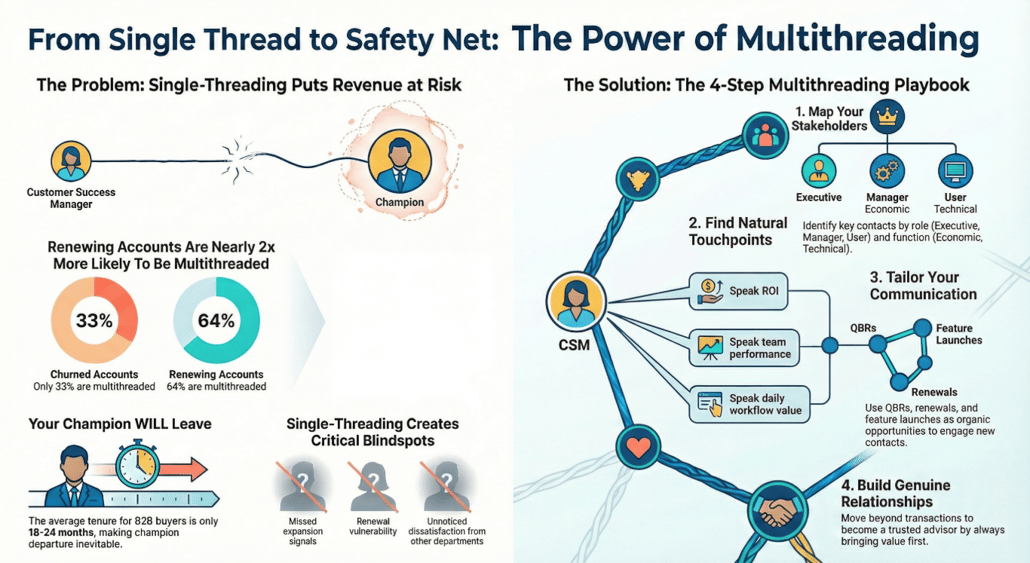
- Higher retention rates - 64% of renewing accounts are multithreaded vs. only 33% of churned accounts (Gainsight, 2023)
- Faster expansion - Multiple engaged stakeholders accelerate SQL generation and upsell conversations
- Risk mitigation - When your primary contact leaves, you maintain continuity through other champions
- Deeper alignment - All key stakeholders understand ROI and value, not just one person filtering information
- Strategic insight - Understanding multiple perspectives reveals opportunities single-threaded relationships miss
- Easier engagement - More contacts provide natural touchpoints for outreach and relationship building
━━━━━━━━━━━━━━━━━━━━━━━━━━━━━━━━━━━━━━
PART 1: UNDERSTANDING MULTITHREADING
━━━━━━━━━━━━━━━━━━━━━━━━━━━━━━━━━━━━━━
Industry Context: The Data Behind Multithreading
Critical Data Points:
- Only 33% of churned accounts are multithreaded compared to 64% of renewing accounts (Gainsight, 2023)
- Accounts with multiple engaged stakeholders show significantly higher Gross Revenue Retention (GRR) and Net Revenue Retention (NRR)
- Champion departure is one of the top 5 churn risk factors in B2B SaaS
- Average tenure of B2B buyers in their roles: 18-24 months - meaning your champion WILL leave eventually
What This Means for CSMs:
- Single-threading is a ticking time bomb - it's not "if" your champion leaves, it's "when"
- Multithreading isn't optional networking - it's critical risk management
- Building relationships proactively (during good times) is 10x easier than reactively (during crises)
- The accounts you lose aren't always dissatisfied with your product - they're often simply single-threaded when champion departed
💡 Pro Tip: Review your book of business right now. How many accounts have only 1-2 active contacts in your CRM? Those are your highest-risk accounts, regardless of current health score. Prioritize multithreading there first.
━━━━━━━━━━━━━━━━━━━━━━━━━━━━━━━━━━━━━━
What is Multithreading?
Definition: Multithreading is the process of establishing genuine relationships with multiple stakeholders across different roles and levels within an account, creating a resilient web of connections rather than depending on a single thread.
What Multithreading Looks Like:
Single-Threaded (Vulnerable):
- One primary contact (Sarah, Marketing Director)
- All communication flows through Sarah
- Product decisions made based on Sarah's perspective alone
- When Sarah leaves → relationship starts from zero with replacement
Multithreaded (Resilient):
- Primary champion (Sarah, Marketing Director)
- Executive sponsor (CMO) for strategic alignment
- Power users (2 Marketing Managers) for daily adoption
- Economic buyer (VP Finance) for renewal decisions
- Technical buyer (IT Director) for integration/security
- When Sarah leaves → 4 other relationships maintain continuity
What Multithreading ISN'T vs. What It IS:
Misconception: Just collecting contacts and adding them to your CRM Reality: Building a network of advocates who champion your value across the organization
Misconception: Going behind your main contact's back to undermine them Reality: Expanding your influence strategically with them as an ally and partner
Misconception: Creating confusing or duplicate messages across the account Reality: Using one consistent core message, tailored to each person's priorities and role
Misconception: Pestering everyone in the company with generic outreach Reality: Strategic engagement with high-value stakeholders at natural touchpoints
Misconception: A one-time networking exercise during onboarding Reality: An ongoing relationship strategy maintained throughout customer lifecycle
💡 Pro Tip: Multithreading isn't about replacing your champion—it's about protecting both of you. When your champion gets promoted or moves to a new role, they want to ensure their successor maintains the relationship. Help them create that continuity.
━━━━━━━━━━━━━━━━━━━━━━━━━━━━━━━━━━━━━━
Why CSMs Avoid Multithreading (And Why You Shouldn't)
Common Objections from CSMs:
1. "My champion will feel threatened" Reality: Most champions appreciate help managing internal communication and want you to succeed
2. "I don't want to step on toes or create politics" Reality: Not multithreading creates politics when decisions are made without your input
3. "I don't have time to manage multiple relationships" Reality: Multithreading saves time by preventing emergency firefighting when your champion leaves
4. "It's awkward to ask for introductions" Reality: It's more awkward explaining to your boss why you lost a $200k account because one person left
5. "My accounts are too small to need multiple contacts" Reality: Even small companies have multiple decision-makers, and champion departures affect all account sizes
The Truth: Multithreading feels uncomfortable initially because you're asking for access. But the discomfort of a single conversation is far less than the panic of losing an account because you were single-threaded.
━━━━━━━━━━━━━━━━━━━━━━━━━━━━━━━━━━━━━━
Best Practices for Understanding Multithreading
- Review your portfolio monthly → Identify which accounts are single-threaded vs. multithreaded
- Track the multithreading ratio → Set team targets for 70%+ accounts with 3+ engaged stakeholders
- Learn from churn post-mortems → How many churned accounts were single-threaded when champion left?
- Calculate the cost → What's the revenue at risk across all your single-threaded accounts?
- Start with highest-value accounts → Prioritize multithreading for enterprise and strategic accounts first
- Use champion departure as learning → When you lose a champion, audit how prepared you were with other relationships
- Share data with your team → Champion the importance of multithreading using retention statistics
━━━━━━━━━━━━━━━━━━━━━━━━━━━━━━━━━━━━━━
━━━━━━━━━━━━━━━━━━━━━━━━━━━━━━━━━━━━━━
PART 2: THE 4-STEP MULTITHREADING APPROACH
━━━━━━━━━━━━━━━━━━━━━━━━━━━━━━━━━━━━━━
Step 1: Map Your Stakeholders
Objective: Identify 2-3 high-value contacts beyond your primary champion
Stakeholder Mapping Framework:
By Role Level:
- Executive Level (C-suite, VP) - Cares about strategic ROI, business outcomes, competitive advantage
- Management Level (Directors, Managers) - Cares about team performance, efficiency, KPI achievement
- End-User Level (Individual contributors) - Cares about daily workflow, feature usability, time savings
By Department:
- Economic Buyers (Finance, Procurement) - Controls budget and renewal decisions
- Technical Buyers (IT, Engineering) - Evaluates security, integration, technical fit
- User Buyers (Marketing, Sales, Operations) - Uses product daily and experiences value
Discovery Questions to Uncover Stakeholders:
Ask your champion:
- "Who else is involved in the renewal decision process?"
- "How does your team's workflow connect with [other department]?"
- "When you present results to leadership, who typically asks the most questions?"
- "If you were out for two weeks, who would be my backup contact?"
- "Who originally championed bringing us on board?"
Prioritization Matrix:
High-value contacts to target first:
- Decision-makers for renewals (Finance, Executive sponsors)
- Power users who experience daily value
- Department heads in adjacent teams who could expand usage
- Technical gatekeepers (IT, Security) who could block renewals
Example: A CSM managing a marketing automation account mapped their stakeholders:
- Primary Champion: Marketing Director (Sarah)
- Executive Sponsor: CMO (rarely engaged)
- Power Users: 2 Marketing Managers using platform daily
- Technical Buyer: IT Director (approved initial purchase)
- Economic Buyer: VP Finance (signs renewal)
They identified the CMO and VP Finance as critical gaps. Within 60 days, they established relationships with both, which proved essential when Sarah left the company 4 months later.
💡 Pro Tip: Create a "Stakeholder Map" document for each strategic account showing: Name, Role, Influence Level (High/Med/Low), Relationship Status (Strong/Developing/None), Last Contact Date, Next Action. Review and update monthly.
━━━━━━━━━━━━━━━━━━━━━━━━━━━━━━━━━━━━━━
Step 2: Find Natural Touchpoints (Don't Force It)
Objective: Identify organic opportunities to engage new stakeholders without creating awkwardness
Natural Touchpoint Strategies:
1. Quarterly Business Reviews (QBRs)
- Invite stakeholders from adjacent departments for broader perspective
- Frame as: "To show comprehensive impact, I'd like to include your sales director to discuss lead quality improvements"
- Benefit: Creates formal reason for multi-department engagement
2. Renewal Conversations
- Naturally involve finance and executive leadership in contract discussions
- Frame as: "To streamline renewal, let's include your CFO in our ROI presentation"
- Benefit: Economic buyers expect involvement at renewal time
3. Technical Issues or Escalations
- Use technical challenges as reason to connect with IT, Engineering, or technical leads
- Frame as: "To resolve this integration issue, I'd like to loop in your IT director for 15 minutes"
- Benefit: Problem-solving creates collaborative first impressions
4. New Feature Launches
- Announce new capabilities to relevant departments who could benefit
- Frame as: "Our new reporting feature could help your analytics team—mind introducing me to their manager?"
- Benefit: Bringing value first establishes positive relationship foundation
5. Expansion Opportunities
- Identify departments not yet using your product but facing problems you solve
- Frame as: "I noticed your sales team manually tracks [X]. Our tool could automate that—worth a 15-minute demo with their director?"
- Benefit: Expansion conversations naturally require new stakeholder engagement
6. Success Stories and Best Practice Sharing
- Share relevant case studies with stakeholders in similar roles
- Frame as: "We helped another company's finance team reduce month-end reporting by 40%—I'd love to show your CFO how"
- Benefit: Value-driven outreach is welcomed, not intrusive
7. Onboarding and Training
- During implementation, engage end-users and managers across departments
- Frame as: "For successful rollout, let's include team leads from each department in training planning"
- Benefit: Implementation naturally requires broad organizational involvement
Example: A CSM managing a CRM account noticed their champion (Sales Director) mentioned challenges with marketing-to-sales handoffs. Instead of forcing an introduction, they waited for the next QBR and said: "To address lead quality challenges you mentioned, let's invite your Marketing Director to discuss alignment opportunities." The Marketing Director joined, appreciated the proactive outreach, and became a strong secondary champion.
💡 Pro Tip: Never say "Can I talk to your boss?" Instead: "To ensure [specific outcome], I'd like to align with [title] for 15 minutes. This will help us [specific benefit]. I'll prepare an agenda and keep it focused." Specificity and value-focus reduce friction.
━━━━━━━━━━━━━━━━━━━━━━━━━━━━━━━━━━━━━━
Step 3: Tailor Your Communication
Objective: Use one consistent core message, but customize focus based on stakeholder priorities
Communication Framework by Level:
Executive Level (C-Suite, VPs)
What they care about:
- Strategic ROI and business outcomes
- Competitive advantage and market positioning
- Risk mitigation and compliance
- Long-term scalability
How to communicate:
- Lead with business impact in dollars or percentages
- Use executive summary format (1-page, bullet points)
- Reference industry benchmarks and competitive intelligence
- Keep meetings to 15-30 minutes maximum
- Schedule quarterly, not monthly
Example message: "Your team achieved 35% improvement in lead conversion this quarter, translating to $180k incremental revenue. Industry benchmark is 22%. This positions you ahead of competitors and supports your 2025 growth targets."
Management Level (Directors, Managers)
What they care about:
- Team performance and efficiency
- Hitting departmental KPIs and goals
- Resource optimization and workflow improvements
- Demonstrating value to their leadership
How to communicate:
- Focus on team productivity and goal achievement
- Provide data showing performance improvements
- Share best practices from similar companies
- Offer tactical recommendations they can implement
- Meet monthly or bi-monthly
Example message: "Your team's adoption of automated workflows saved 12 hours weekly—that's 48 hours/month your managers can redirect to strategic initiatives. Here are 3 additional features that could save another 8 hours based on what similar teams achieved."
End-User Level (Individual Contributors)
What they care about:
- Making their daily job easier
- Learning features and shortcuts
- Solving immediate frustrations
- Career development and skill building
How to communicate:
- Focus on practical tips and feature tutorials
- Provide quick-win solutions to daily challenges
- Offer training resources and documentation
- Make yourself accessible for questions
- Engage as needed, not on fixed schedule
Example message: "I noticed you're manually exporting reports weekly. Here's a 5-minute video showing how to automate this, saving you 2 hours every week. Let me know if you want help setting it up."
Consistency Principle:
Your core message stays the same: "We help [Company] achieve [specific outcome]"
What changes: The outcome you emphasize and the evidence you use
Example:
- To CMO: "We help TechCorp achieve 35% higher lead conversion" (strategic outcome)
- To Marketing Manager: "We help your team save 48 hours monthly on reporting" (efficiency outcome)
- To Marketing Analyst: "We help you automate manual exports so you focus on insights" (practical outcome)
💡 Pro Tip: Before every stakeholder conversation, spend 5 minutes researching: What are their department's goals this quarter? What challenges has your champion mentioned about their area? What metrics would they care about? Tailor your first interaction to show you understand their world.
━━━━━━━━━━━━━━━━━━━━━━━━━━━━━━━━━━━━━━
Step 4: Build Genuine Relationships
Objective: Move beyond transactional updates to become a trusted advisor across multiple stakeholders
Relationship-Building Strategies:
1. Bring Value First, Ask Later
Don't lead with: "Can I get 15 minutes to introduce myself?"
Instead lead with value:
- "I have insights from similar companies in your industry that might help with [challenge]"
- "I noticed [industry trend]—here's how it could impact your team and three ways to prepare"
- "Our customer in a similar role improved [metric] by 40%—want to see their approach?"
2. Understand Their Professional Goals
Ask questions beyond product usage:
- "What are your team's top priorities this quarter?"
- "What metrics is your leadership most focused on?"
- "What's the biggest challenge keeping you from hitting your goals?"
- "If you could wave a magic wand and fix one thing, what would it be?"
3. Position Yourself as an Advisor
Share relevant content:
- Industry reports and trends affecting their department
- Case studies from companies they'd recognize
- Best practices from your customer base
- Competitive intelligence they'd find valuable
4. Leverage Success Stories Strategically
"I helped another customer improve lead conversion 40% by getting marketing and sales aligned in a 30-minute sync. Their CMO loved the results. Could we try something similar here?"
Why this works:
- Provides social proof (another customer achieved results)
- Quantifies the outcome (40% improvement)
- Low commitment ask (30-minute meeting)
- Frames you as value-creator, not product pusher
5. Remember Personal Details
Track and reference:
- Career milestones (promotions, certifications)
- Company events (funding rounds, product launches)
- Personal interests (when appropriate and shared publicly)
- Previous conversations (shows you listen and care)
6. Create Regular Touchpoints
Don't wait for QBRs or renewals:
- Share relevant industry article: "Thought of you when I saw this..."
- Congratulate on company achievements: "Saw your funding announcement—exciting!"
- Offer proactive help: "Noticed [trend in their usage]—want to optimize?"
- Introduce valuable connections: "You should meet our customer in [similar role]"
Example: A CSM built a relationship with a customer's CFO by:
- Month 1: Sent executive summary showing ROI in financial terms the CFO cared about
- Month 2: Shared analyst report on SaaS spend optimization relevant to CFO's cost-reduction goals
- Month 3: Invited CFO to 15-minute call discussing how similar companies justify software spend to boards
- Month 4: CFO became advocate, defended budget during company-wide cuts, and introduced CSM to portfolio companies
The relationship wasn't transactional—it was built on consistent value delivery.
💡 Pro Tip: For each stakeholder, maintain a "Value Delivered" log tracking: insights shared, problems solved, connections made, outcomes achieved. Review before every interaction to continue building on previous value, not starting from scratch.
━━━━━━━━━━━━━━━━━━━━━━━━━━━━━━━━━━━━━━
Best Practices for the 4-Step Approach
- Map stakeholders systematically → Use the framework by role level and department, document in your CRM
- Find natural touchpoints first → QBRs, renewals, feature launches create organic engagement opportunities
- Tailor communication by level → Executives want strategic ROI, managers want team performance, end-users want daily workflow improvements
- Lead with value always → Never ask for time without offering something valuable first
- Build genuine relationships → Move beyond transactions to become trusted advisor they want to talk to
- Document everything → Track stakeholder maps, last contact dates, value delivered, and next actions
- Review and update monthly → Relationships decay without maintenance—schedule regular stakeholder reviews
━━━━━━━━━━━━━━━━━━━━━━━━━━━━━━━━━━━━━━
PART 3: NAVIGATING OBJECTIONS AND RESISTANCE
━━━━━━━━━━━━━━━━━━━━━━━━━━━━━━━━━━━━━━
The Most Common Barrier: POC Gatekeeping
The Scenario:
You ask your primary contact to introduce you to their sales director. They respond: "Thanks, but just run everything through me. I'll pass along any important information."
Why This Happens:
- They feel protective of relationships (political capital)
- They worry you'll discover problems they haven't shared
- They think it creates extra work for colleagues
- They want to maintain control and relevance
- They genuinely believe they can relay everything effectively
The Key Shift:
Move from asking permission to confidently stating intention with a clear, value-driven reason.
Don't say: "Would it be okay if I maybe talked to your sales director?"
Instead say: "To ensure your sales team is fully enabled on the new features, I'll connect with their manager for 15 minutes to align on their goals. This helps us tailor the rollout for maximum impact."
Why this works:
- Positions you as a partner taking ownership of their success
- Frames the request as necessary for optimal outcomes
- States intent confidently rather than asking permission
- Focuses on value for their colleague, not your agenda
━━━━━━━━━━━━━━━━━━━━━━━━━━━━━━━━━━━━━━
Objection Handling Framework
Technique 1: Strategic Questioning (Uncover Value)
Use when: You want to understand their workflow and create organic reason for involvement
Scenario: POC says "Just run everything through me"
Your Response: "I can do that. To ensure our work has the biggest impact, I'd like to understand your marketing-to-sales handoff. A quick alignment with the sales leader often reveals ways we can generate higher quality leads for their team."
Why it works:
- Respects their position while uncovering valuable context
- Connects your request to direct benefit for them and their colleague
- Creates natural reason to involve others based on workflow understanding
- Positions the conversation as discovery, not going around them
Technique 2: Value-Driven Statement (State Intent)
Use when: You need to directly involve another stakeholder for successful outcomes
Scenario: POC says "Just run everything through me"
Your Response: "Understood. To get your sales team fully enabled on their new targets, I'll connect with their manager for 15 minutes to align on their goals. This will help us tailor the rollout for maximum impact."
Why it works:
- States intention confidently without asking permission
- Frames request as necessary for optimal customer outcomes
- Specifies limited time commitment (15 minutes)
- Positions you as proactive partner, not passive order-taker
━━━━━━━━━━━━━━━━━━━━━━━━━━━━━━━━━━━━━━
Common Objections and Response Scripts
Objection 1: "Just run everything through me"
First Response: "I respect that you're the owner of this relationship. Quick chats with your team save you from playing translator. You remain the quarterback—I'm just helping you execute the play."
If They Persist: "What if an urgent issue comes up while you're on vacation or in back-to-back meetings? Having relationships with 2-3 people on your team ensures your organization never loses support, even when you're unavailable."
Why this works:
- Acknowledges their ownership while highlighting efficiency benefit
- Addresses their fear of being bypassed by emphasizing their central role
- Practical scenario (vacation, busy periods) makes the need concrete
Objection 2: "My team is too small/busy for more meetings"
First Response: "That's exactly why I'm suggesting this. Targeted 15-minute chats are more efficient than long meetings with everyone. We can do async updates through email or Slack for everything else that doesn't require live discussion."
If They Persist: "How about one 30-minute stakeholder mapping session where you help me understand who owns what? After that, I'll update you monthly and only do direct check-ins with others when critical."
Why this works:
- Turns their objection into a reason (busy = need efficiency)
- Offers compromise (one mapping session, then minimal ongoing contact)
- Emphasizes time savings rather than time burden
Objection 3: "I'll share everything with them"
First Response: "I appreciate that commitment. Technical details and specific use cases often get lost in translation, though. Direct chats ensure accuracy and actually save you time from having to explain everything."
If They Persist: "Who's your backup if you get promoted or take a new role? Let's connect with them now so it's not a scramble later. This protects both of us and ensures continuity for your team."
Why this works:
- Acknowledges their willingness while highlighting communication challenges
- Career progression angle flatters them (promotion scenario)
- Frames multithreading as protecting their legacy
Objection 4: "My boss doesn't want to be bothered"
First Response: "I completely understand. This isn't a regular meeting—just a 15-minute quarterly check-in to show ROI with data. Most executives appreciate brief, results-focused updates rather than long presentations."
If They Persist: "Respect the boundary, no problem. Would a written quarterly executive summary work instead? That way they stay informed without meeting time, and you have documentation showing value for budget conversations."
Why this works:
- Respects stated boundary while offering valuable alternative
- Emphasizes brevity and data focus (executives' preferences)
- Written summary still achieves goal of executive visibility
Objection 5: "We're not ready for that yet"
First Response: "When would make sense? I'd rather build those relationships during smooth periods than scramble during renewal or when urgent needs arise. Starting early is always easier than catching up."
If They Persist: "Fair enough. How about we revisit in 60 days? In the meantime, if anything comes up where another perspective would help, I'm ready to connect."
Why this works:
- Sets specific timeframe rather than accepting indefinite delay
- Frames early relationship-building as easier (which is true)
- Leaves door open for organic opportunities
💡 Pro Tip: When you get resistance, listen for the underlying concern (control, politics, time, relevance). Address that specific fear directly rather than pushing harder on your request. Show them how multithreading solves their problem, not just yours.
━━━━━━━━━━━━━━━━━━━━━━━━━━━━━━━━━━━━━━
When to Compromise vs. When to Persist
Red Flags Where You Should Persist:
- Account has >$100k ARR and only one contact
- Your primary contact is junior or new to the company
- Renewal is within 6 months and you've never met decision-makers
- Recent organizational changes (layoffs, acquisitions, leadership turnover)
- Low engagement from primary contact (slow responses, missed meetings)
Green Flags Where You Can Compromise:
- Small account (<$25k ARR) with simple use case
- Primary contact is C-level with full decision authority
- Strong relationship with high engagement and trust
- Account renewed multiple times with same champion successfully
- Organizational structure is flat with minimal hierarchy
The Balanced Approach:
Start with low-pressure multithreading:
- Ask champion to include others in QBRs (easy yes)
- Request introduction to one technical contact for specific purpose (reasonable ask)
- Build from those relationships organically over time
- Escalate intensity only if red flags emerge (champion turnover risk, renewal concerns)
Don't force multithreading immediately for every account. Be strategic based on account value, risk level, and relationship dynamics.
━━━━━━━━━━━━━━━━━━━━━━━━━━━━━━━━━━━━━━
Best Practices for Navigating Objections
- Shift from asking to stating → "I'll connect with [stakeholder] to ensure [outcome]" vs. "Can I maybe talk to...?"
- Lead with value and specificity → Always explain the benefit and keep time commitment specific (15 minutes, quarterly)
- Address underlying concerns → Listen for fears about control, politics, time, or relevance and address those directly
- Use strategic questioning → Understand workflow to create organic reasons for stakeholder involvement
- Respect boundaries when appropriate → Know when to compromise vs. persist based on account value and risk
- Offer alternatives → If direct meetings won't work, suggest written updates, mapping sessions, or specific-purpose calls
- Frame as protecting the champion → Position multithreading as ensuring continuity if they get promoted or move roles
━━━━━━━━━━━━━━━━━━━━━━━━━━━━━━━━━━━━━━
REAL-WORLD APPLICATION
Case Study: How Multithreading Saved a $400k Account
Month 1: The Risk Emerges
Jennifer, a CSM at a SaaS analytics company, had a strong relationship with her champion, David (Director of Marketing) at a $400k ARR enterprise account. David loved the product and Jennifer met with him bi-weekly for 18 months.
Then David announced he was leaving for a VP role at another company. Effective date: 30 days.
The Problem:
- Jennifer had never met David's boss (CMO) or his replacement
- Finance team (renewal signers) didn't know who she was
- 4 months until renewal
- Competitor already in conversations with new Marketing Director
Month 2: Emergency Multithreading
Jennifer immediately implemented aggressive multithreading:
Week 1:
- Asked David for introductions to: CMO, VP Finance, incoming replacement, 2 Marketing Managers
- Positioned as: "I want to ensure seamless transition and continued success for your team after you leave"
- David readily agreed—he wanted to leave a strong legacy
Week 2:
- Met CMO for 20-minute "transition briefing"
- Shared comprehensive ROI report showing $180k value delivered
- Positioned herself as continuity resource during leadership change
Week 3:
- Connected with incoming Marketing Director (Sarah) before David left
- Offered "accelerated onboarding" to help Sarah understand current setup
- Shared documentation of all campaigns, workflows, and results
Week 4:
- Met with VP Finance to discuss renewal timeline
- Provided executive summary showing cost savings and efficiency gains
- Secured verbal commitment to budget for renewal
Month 3-4: Relationship Building
With David gone, Jennifer maintained:
- Weekly calls with new Marketing Director Sarah (primary champion)
- Monthly check-ins with 2 Marketing Managers (power users)
- Quarterly update email to CMO with key metrics
- Renewal prep meetings with VP Finance
Month 5: Renewal Success
When renewal arrived:
- CMO was already sold on value (not learning about product for first time)
- VP Finance had comprehensive ROI documentation
- Sarah (new Marketing Director) was competent advocate despite short tenure
- Marketing Managers provided grassroots support
Result: ✓ Renewed at 108% (upsell due to seat expansion) ✓ CMO became reference customer for similar enterprise accounts ✓ Competitor conversation ended before gaining traction ✓ Jennifer promoted to Senior CSM for "exemplary risk management"
Key Strategies Used:
- Treated champion departure as opportunity, not crisis
- Leveraged departing champion for warm introductions
- Brought immediate value to each new stakeholder (ROI reports, onboarding support)
- Established relationships before renewal pressure emerged
- Maintained consistent engagement rhythm across multiple contacts
What Would Have Happened Without Multithreading:
- Sarah (new Marketing Director) would have inherited product with no context
- Finance would have questioned ROI without documented proof
- CMO wouldn't have been engaged or aware of value
- Competitor would have had 4 months to build relationships unchallenged
- Likely outcome: Churn or significant price reduction
━━━━━━━━━━━━━━━━━━━━━━━━━━━━━━━━━━━━━━
KEY TAKEAWAYS: BEST PRACTICES RECAP
✓ Single-threaded relationships put 64% of your revenue at risk - Only 33% of churned accounts are multithreaded vs. 64% of renewing accounts
✓ Multithreading is proactive resilience building - Start during onboarding when relationships are easiest to build, not during renewal crisis
✓ Your champion should be your ally, not a barrier - Position multithreading as supporting them and ensuring their legacy, not bypassing them
✓ Find natural touchpoints rather than forcing introductions - QBRs, renewals, technical issues, and feature launches create organic engagement opportunities
✓ Tailor communication by role and level - Executives want strategic ROI, managers want team performance, end-users want daily workflow improvements
✓ Handle objections with value-driven statements - Shift from asking permission to confidently stating intention with clear benefits
✓ Quality beats quantity - 3 strong, genuine relationships trump 10 superficial CRM contacts
✓ Map stakeholders systematically - Document by role level and department: executives, managers, end-users across economic, technical, and user buyer categories
✓ Lead with value always - Never ask for time without offering insights, case studies, or solutions first
✓ Track multithreading as a leading indicator - Monitor % of accounts with 3+ relationships as closely as health scores
✓ The discomfort of asking for access is temporary - The pain of losing an account due to single-threading is permanent