.png?width=1344&height=768&name=Adobe%20Express%20-%20file%20(1).png)
Learning Objectives:
- Understand how CSMs complement Sales, Support, Product, and Professional Services teams
- Create effective collaboration maps to improve cross-functional handoff processes
- Build credibility as a trusted advisor through expertise, reliability, and empathy
- Apply proactive engagement strategies that anticipate customer needs
- Navigate difficult conversations while maintaining trust and transparency
- Position yourself as an extension of the customer's team rather than vendor rep
━━━━━━━━━━━━━━━━━━━━━━━━━━━━━━━━━━━━━━
Introduction
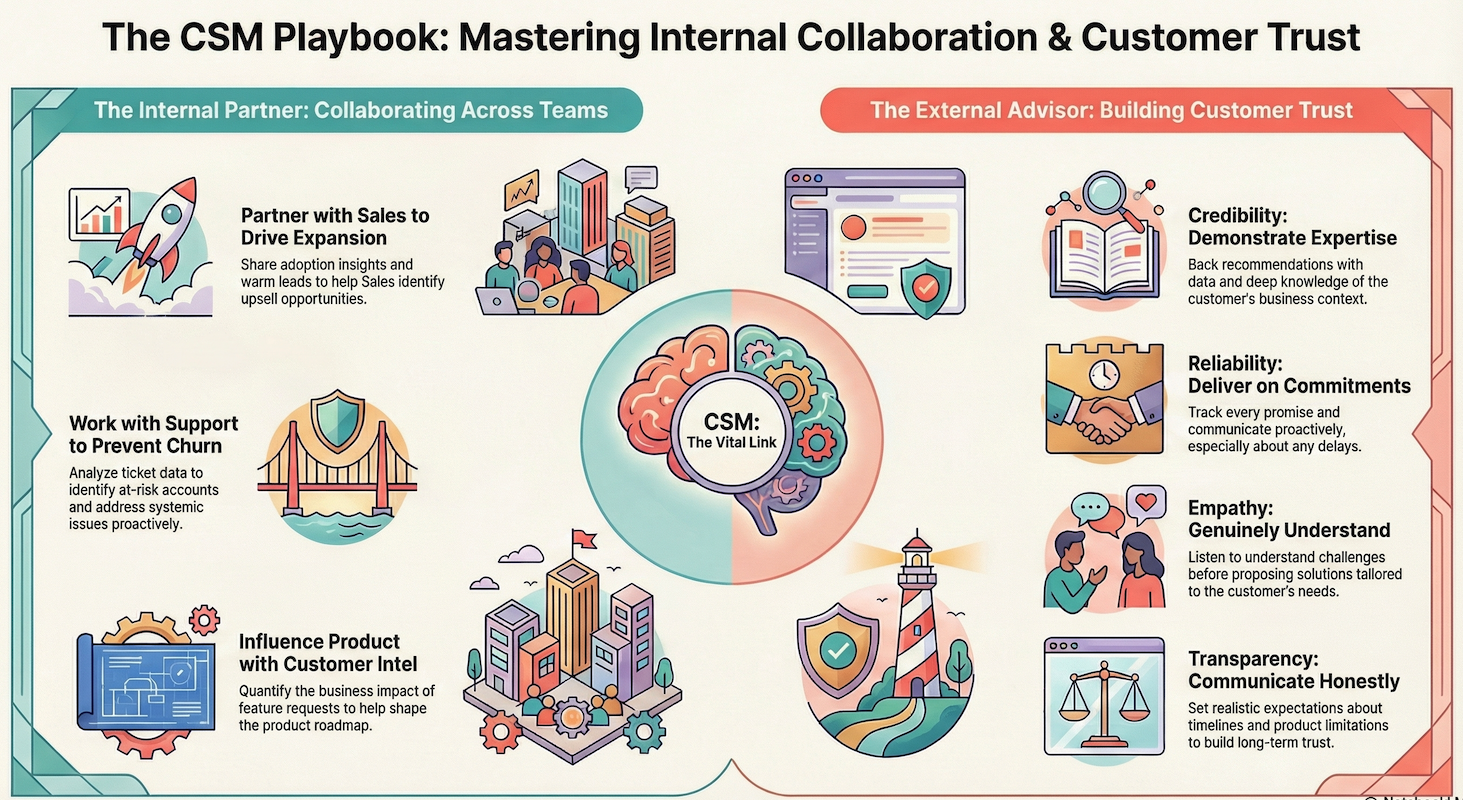
The CSM's role is uniquely positioned at the intersection of several critical business functions, ensuring a seamless connection between customer needs and organizational goals. By understanding how they complement other roles and establishing credibility as a trusted advisor, CSMs drive long-term success for both customers and their organizations.
Effective positioning requires both external credibility (trusted by customers) and internal influence (valued by colleagues across departments).
The Cost of Poor Organizational Positioning
Without clear positioning and cross-functional relationships, CSMs face:
- Ineffective handoffs from Sales leading to misaligned expectations and early churn
- Duplicated work with Support teams creating customer confusion about who to contact
- Product feedback falling into black holes because CSMs lack established communication channels
- Limited influence on company strategy despite having best customer intelligence
- Siloed work that prevents them from accessing resources needed to help customers effectively
The Benefits of Strategic Organizational Positioning
Strong positioning and relationships enable you to:
- Access internal resources quickly to solve customer problems (Engineering, Product, Leadership)
- Influence product roadmap by effectively communicating customer needs with data
- Create seamless customer experience through coordinated handoffs across departments
- Build personal credibility that accelerates career advancement within the organization
- Establish yourself as customer expert whose insights inform Sales, Marketing, and Product strategies
- Navigate organizational politics effectively to advocate for customers and secure resources
━━━━━━━━━━━━━━━━━━━━━━━━━━━━━━━━━━━━━━
PART 1: HOW CSMS COMPLEMENT OTHER ROLES
Understanding how CSMs work with adjacent teams creates better collaboration and customer outcomes.
━━━━━━━━━━━━━━━━━━━━━━━━━━━━━━━━━━━━━━
Collaboration with Sales
How They Differ
- Sales focus: Acquiring new customers and closing deals
- CSM focus: Ensuring customers achieve long-term success after the sale
- Sales metric: New ARR, pipeline, quota attainment
- CSM metric: Retention, NRR, customer health
How They Complement Each Other
Sales → CSM:
- Provides context about customer goals, pain points, and decision criteria during handoff
- Shares competitive intelligence and pricing negotiations that affect expectations
- Communicates promises made during sales process that CS must deliver on
- Identifies key stakeholders and political landscape within customer organization
CSM → Sales:
- Shares adoption insights to identify accounts ready for upsell conversations
- Provides expansion opportunities and warm leads from existing customers
- Offers reference customers and case studies for sales enablement
- Feeds back market intelligence on objections, competitors, and buying patterns
Example: After completing onboarding, a CSM informed Sales that a customer was nearing their usage limits and expressing interest in additional capabilities. Sales rep conducted expansion discussion with warm introduction from CSM, resulting in $45k upsell that customer was already expecting and wanted.
💡 Pro Tip: Create a standing bi-weekly "CS-Sales Sync" meeting (30 minutes). CSMs share expansion opportunities, Sales shares new customer context. This 1 hour per month collaboration typically generates 5-10x ROI through better handoffs and expansion identification.
━━━━━━━━━━━━━━━━━━━━━━━━━━━━━━━━━━━━━━
Collaboration with Support
How They Differ
- Support focus: Resolves technical issues reactively through ticketing systems
- CSM focus: Proactive engagement to prevent escalations and drive outcomes
- Support metric: Ticket resolution time, CSAT, ticket volume
- CSM metric: Health scores, adoption, retention
How They Complement Each Other
Support → CSM:
- Shares recurring ticket data with CSMs to identify at-risk accounts showing distress patterns
- Escalates strategic customer issues requiring executive attention or relationship management
- Provides technical expertise for complex customer configurations
- Flags systemic product issues affecting multiple CSM customers
CSM → Support:
- Coordinates with Support for smoother escalations on strategic accounts
- Provides customer context (goals, health status) to help Support prioritize
- Identifies training gaps that reduce support ticket volume
- Offers proactive check-ins for customers with high ticket activity
Example: A CSM noticed an uptick in support tickets for a key enterprise customer around a specific feature. They worked with Support to deliver a focused training session addressing root cause confusion. Tickets dropped 60%, customer satisfaction improved, and CSM prevented potential churn from frustration.
💡 Pro Tip: Set up a weekly automated report showing support ticket volume by your accounts. If any customer has 3+ tickets in a week, proactively reach out: "I saw you've been working with Support on [issue]. Everything resolved, or is there a bigger problem we should address strategically?"
━━━━━━━━━━━━━━━━━━━━━━━━━━━━━━━━━━━━━━
Collaboration with Product
How They Differ
- Product focus: Designs and develops the platform based on market trends and strategic vision
- CSM focus: Gathers and shares customer insights to align roadmap with user needs
- Product metric: Feature adoption, user engagement, product-led growth
- CSM metric: Customer satisfaction with product, churn due to missing features
How They Complement Each Other
Product → CSM:
- Shares roadmap and upcoming features for CSMs to communicate with customers
- Provides beta access for engaged customers to test new capabilities
- Explains technical constraints and feasibility of customer requests
- Asks CSMs for user research and feedback validation
CSM → Product:
- Consolidates feature requests from multiple customers with business impact quantification
- Shares usability issues and adoption barriers preventing product value
- Provides win/loss data on why customers chose you or competitors
- Validates Product hypotheses through customer conversations
Example: A CSM consolidated feedback from multiple enterprise customers requesting advanced reporting features. They quantified the impact ($800k ARR at risk, 15 customers affected), presented to Product with specific use cases, and the feature was prioritized for next quarter. This led to increased satisfaction, prevented churns, and resulted in 3 upsells.
💡 Pro Tip: Don't just pass along feature requests - be Product's strategic partner. Send weekly/bi-weekly "Customer Intel Brief" with: Top 3 feature requests by ARR impact, Usability issues affecting adoption, Competitive features mentioned, Successful workarounds customers have created.
━━━━━━━━━━━━━━━━━━━━━━━━━━━━━━━━━━━━━━
Collaboration with Professional Services
How They Differ
- Professional Services focus: Implement custom solutions and handle complex technical projects
- CSM focus: Ongoing value realization and adoption after implementation completes
- PS metric: Project completion, billable hours, implementation success
- CSM metric: Post-implementation adoption, sustained usage, ROI delivery
How They Complement Each Other
Professional Services → CSM:
- Provides initial configuration, customization, and technical training
- Shares implementation documentation and technical architecture decisions
- Identifies customer's technical sophistication and training needs
- Flags any scope creep or misalignment discovered during implementation
CSM → Professional Services:
- Reinforces PS knowledge through regular check-ins and advanced adoption strategies
- Identifies customers needing additional implementation services or customization
- Provides ongoing relationship management during long implementation projects
- Ensures PS work connects to customer's business goals and success metrics
Example: After Professional Services completed a complex multi-system integration, a CSM ensured the customer's team continued using the integrated features effectively through quarterly optimization sessions. This led to 95% sustained adoption (vs. 60% typical), strong renewal, and customer becoming reference for future PS engagements.
💡 Pro Tip: For customers with Professional Services engagements, establish a "handoff meeting" where PS, CSM, and customer review: What was built, why it matters, how to use it, who to contact for what. This prevents the common failure mode where PS finishes and customers don't know how to actually use what was built.
━━━━━━━━━━━━━━━━━━━━━━━━━━━━━━━━━━━━━━
Best Practices for Cross-Functional Collaboration
- Create collaboration maps → Document what you receive from and share with each department to identify gaps
- Establish regular sync meetings → Bi-weekly with Sales (expansion), weekly with Product (feedback), as-needed with Support (escalations)
- Build personal relationships → Know your counterparts in each department and understand their goals and constraints
- Speak their language → Frame customer needs in terms that resonate (revenue for Sales, user experience for Product, efficiency for Support)
- Quantify your contributions → Track expansion opportunities shared with Sales, feedback provided to Product, escalations prevented through proactive CS
- Improve handoff processes → Document what information is needed from Sales, what context helps Support, what data Product values
- Position as strategic partner → Share customer intelligence proactively rather than only when asked or in crisis situations
━━━━━━━━━━━━━━━━━━━━━━━━━━━━━━━━━━━━━━
PART 2: ESTABLISHING CREDIBILITY AS A TRUSTED ADVISOR
To be effective, CSMs must position themselves as trusted advisors who are credible, reliable, and empathetic. This status ensures they are respected by customers and valued internally across teams.
━━━━━━━━━━━━━━━━━━━━━━━━━━━━━━━━━━━━━━
Attributes of a Trusted Advisor
Credibility: Demonstrating Expertise
What it means:
- Deep product knowledge and industry expertise
- Speaks confidently and backs recommendations with data
- Stays current on best practices and emerging trends
- Understands customer's business context and competitive landscape
How to build it:
- Get product certified and continuously test new features before recommending
- Read customer's industry publications and understand their market dynamics
- Study successful implementations and document patterns that predict success
- Prepare thoroughly for every interaction with customer research and data
Credibility in action: Instead of: "You should try Feature X" Trusted advisor says: "I analyzed your usage data and noticed you're spending 10 hours weekly on manual reporting. Feature X automated this for 3 similar companies, saving average 8 hours weekly. Based on your team size, that's $25k annual value. Want to see how it works for your specific workflows?"
💡 Pro Tip: Before every customer call, spend 10 minutes reviewing: their recent product usage, support tickets, industry news affecting their business, and your previous conversation notes. This preparation shows you're invested and builds credibility faster than any product knowledge.
━━━━━━━━━━━━━━━━━━━━━━━━━━━━━━━━━━━━━━
Reliability: Consistent Follow-Through
What it means:
- Delivers on commitments without exception
- Provides regular updates proactively, even when there's no new information
- Maintains predictable communication rhythm customers can count on
- Transparent about challenges, delays, and limitations
How to build it:
- Use task management systems to track every customer commitment (no mental lists)
- Set reminders for follow-ups and never miss a promised update
- Under-promise and over-deliver rather than the reverse
- Communicate delays immediately rather than hoping customer won't notice
Reliability in action: Trusted advisor: "I committed to getting you an answer by Friday. Product team needs until Monday for full analysis, but I wanted to update you proactively. Here's what I know so far, and I'll have complete answer Monday at 10am."
NOT: [Radio silence until Monday, then "sorry for delay"]
💡 Pro Tip: Set a personal standard: "If I say I'll do it, it gets done, period." One missed commitment can destroy 6 months of built trust. If you realize you can't meet a deadline, communicate 48 hours BEFORE the deadline, not after.
━━━━━━━━━━━━━━━━━━━━━━━━━━━━━━━━━━━━━━
Empathy: Genuine Understanding
What it means:
- Understands the customer's business challenges and goals deeply
- Actively listens to understand problems before proposing solutions
- Acknowledges frustrations and validates concerns authentically
- Tailors recommendations to customer's specific context and constraints
How to build it:
- Ask open-ended questions about their business challenges, not just product usage
- Take notes on personal details (team changes, company milestones, individual preferences)
- Reference previous conversations to show you remember and care
- Celebrate their wins as if they were your own achievements
Empathy in action: NOT: "Have you tried using Feature X for that problem?" Trusted advisor: "I hear you're frustrated with [specific challenge]. Before suggesting solutions, help me understand: How is this impacting your team's daily work? What have you already tried? What constraints are you working within?"
💡 Pro Tip: Keep a "Customer Context Doc" for each strategic account noting: key stakeholders and their priorities, company goals this quarter, personal details (kids' sports, hobbies), previous challenges solved, and ongoing concerns. Review before every call to demonstrate genuine care.
━━━━━━━━━━━━━━━━━━━━━━━━━━━━━━━━━━━━━━
Transparency: Honest Communication
What it means:
- Communicates honestly, even when delivering difficult messages
- Shares realistic timelines and outcomes without overpromising
- Admits when you don't know something rather than guessing
- Sets appropriate expectations about what's possible within company constraints
How to build it:
- Be upfront about product limitations and roadmap timelines
- Explain "why" behind decisions, not just "what" was decided
- Share bad news proactively rather than waiting for customers to discover it
- Admit mistakes quickly and focus on solutions
Transparency in action: Customer asks: "When will [promised feature] be available?" NOT: "Soon!" or "We're working on it" Trusted advisor: "It's scheduled for Q2 based on current roadmap, though complex features sometimes shift by a month. I'll get you monthly updates on progress, and here's a workaround you can use in the meantime."
━━━━━━━━━━━━━━━━━━━━━━━━━━━━━━━━━━━━━━
Best Practices for Building Trusted Advisor Status
- Build all four attributes systematically → Credibility through expertise, reliability through follow-through, empathy through listening, transparency through honesty
- Prepare thoroughly before every interaction → Review usage data, CRM notes, industry context, and previous conversations
- Document commitments rigorously → Use task management to track every promise made and ensure delivery
- Communicate proactively → Update customers before they ask, especially during delays or challenges
- Validate before solving → Understand the real problem through questions before proposing solutions
- Maintain customer context → Keep notes on business goals, team changes, and personal details for each account
- Set realistic expectations consistently → Under-promise and over-deliver rather than hoping for best-case scenarios
- Admit what you don't know → "Let me research that and get back to you by [specific time]" builds more trust than guessing
━━━━━━━━━━━━━━━━━━━━━━━━━━━━━━━━━━━━━━
PART 2: ACTION PLAN FOR BUILDING TRUST
Trust isn't built overnight - it requires a structured approach applied consistently over time.
━━━━━━━━━━━━━━━━━━━━━━━━━━━━━━━━━━━━━━
Step 1: Understand the Customer's Business Goals & Challenges
Research and Discovery Process
Before first customer call:
- Research the customer's company, industry trends, and competitive landscape
- Review their website, recent news, LinkedIn for company updates
- Understand their business model and how they make money
- Identify potential challenges in their industry
During discovery:
- Ask strategic discovery questions to uncover underlying challenges
- Understand their organizational structure and decision-making process
- Document success criteria and KPIs that align with their business objectives
- Identify gaps between current state and desired outcomes
After discovery:
- Summarize understanding in writing and confirm accuracy with customer
- Map your product capabilities to their specific goals
- Create success plan with measurable milestones
- Share with relevant stakeholders for alignment
Example Question: Instead of: "Are you happy with the product?" Ask: "How does our solution fit into your broader company strategy this quarter? What metrics will your leadership use to evaluate this investment?"
💡 Pro Tip: Create a "Customer Blueprint" document after first few calls containing: Organizational chart, business goals, success metrics, challenges, constraints, decision criteria. Share it with the customer for validation - this demonstrates investment in understanding their business.
━━━━━━━━━━━━━━━━━━━━━━━━━━━━━━━━━━━━━━
Step 2: Align Recommendations with Measurable Outcomes
Data-Driven Recommendation Framework
Connect every recommendation to customer goals:
- Use their language and metrics when proposing solutions
- Show tangible value through case studies from similar companies
- Quantify expected business impact using their success criteria
- Present options with trade-offs rather than single recommendations
ROI Communication Formula:
Current State: [Quantified problem] Proposed Solution: [Specific product capability or approach] Expected Outcome: [Measurable improvement] Similar Customer Proof: [Relevant case study or data]
Example: "Your usage data shows that teams using Feature X reduce manual work by 30%. Based on your team of 10 spending 5 hours weekly on this process, implementing this across departments could save your company 150 hours per month. Here's how a similar company in your industry achieved this result..."
💡 Pro Tip: Build a "Customer ROI Calculator" spreadsheet template. For each recommendation, show: Current cost/time, Improved efficiency, Dollar value of improvement, Implementation effort. Having this calculation ready makes recommendations concrete rather than conceptual.
━━━━━━━━━━━━━━━━━━━━━━━━━━━━━━━━━━━━━━
Step 3: Follow Up Consistently to Reinforce Commitments
Consistency Framework
Types of follow-up:
Immediate (Within 24 hours):
- Send meeting summary with action items, owners, and due dates
- Confirm understanding of next steps
- Provide any resources promised during call
Short-term (Within 1 week):
- Check on progress for time-sensitive items
- Proactively offer help if customer hasn't started action items
- Share relevant resources or insights
Regular (Ongoing):
- Stick to committed check-in cadence (weekly/monthly/quarterly)
- Provide updates on long-term initiatives even without progress
- Reference previous conversations to show continuity
Example of reinforcing commitments:
If a product feature is delayed, don't just say "It's coming soon."
Instead: "We're expecting this feature in Q2 based on current roadmap. I'll send you monthly updates on progress starting next month. In the meantime, I recommend using [alternative method] to achieve similar results. Here's a guide I created showing how 3 other customers are handling this currently."
💡 Pro Tip: Create email templates for common follow-ups (meeting summaries, check-ins, updates) but ALWAYS customize with specific customer context. Templates save time on structure, but personalization maintains relationship quality.
━━━━━━━━━━━━━━━━━━━━━━━━━━━━━━━━━━━━━━
Best Practices for Trust-Building Actions
- Research before every interaction → Know their business, industry, and recent company developments
- Ask better questions → "How does this impact your Q2 OKRs?" beats "How's it going?"
- Quantify recommendations → Show ROI calculations and similar customer outcomes, not just feature descriptions
- Create written summaries → Follow every call with action items, owners, and timelines within 24 hours
- Maintain communication rhythm → Stick to committed cadence (weekly/monthly) regardless of whether there's "news"
- Be honest about limitations → Set realistic expectations about timelines, feasibility, and constraints
- Personalize every interaction → Reference previous conversations, customer context, and their specific business situation
- Track all commitments systematically → Use tools to ensure nothing falls through cracks and every promise is kept
━━━━━━━━━━━━━━━━━━━━━━━━━━━━━━━━━━━━━━
PART 3: PROACTIVE ENGAGEMENT STRATEGIES
Trusted advisors stay ahead of customer needs rather than waiting for problems to arise.
━━━━━━━━━━━━━━━━━━━━━━━━━━━━━━━━━━━━━━
Proactive Engagement Tips
Beyond Standard QBRs
- Schedule regular check-ins - Go beyond quarterly business reviews by offering strategy calls when relevant to their business
- Share tailored insights - Send industry reports, case studies, or product tips that directly impact their specific challenges
- Introduce relevant case studies - When another company solves similar challenge, proactively share that success story
- Anticipate renewal conversations early - Identify at-risk accounts 90-120 days in advance and address concerns proactively
- Be a connector - Introduce customers to peers, industry experts, or internal resources that add value to their business
Example of proactive outreach:
"Hey [Customer Name], I came across a report on [industry trend] that could impact your team's operations. Thought it might be useful for your upcoming strategy planning. Let me know if you'd like to discuss how we can align our product with these trends!"
💡 Pro Tip: Set up Google Alerts for your top 20 customers' company names and industries. When news breaks (funding, leadership changes, market shifts), reach out within 24 hours with relevant insights or congratulations. This responsiveness builds incredible loyalty.
━━━━━━━━━━━━━━━━━━━━━━━━━━━━━━━━━━━━━━
Scenario Guide: Navigating Difficult Conversations
The following real-world scenarios help CSMs maintain trust during challenging situations.
Scenario 1: Handling Objections with Transparency
Customer Concern: "I don't see enough ROI to justify renewing."
Trusted Advisor Response:
- Acknowledge their concern - "I completely understand. Can you share which specific areas you feel aren't delivering value?"
- Provide data - "Your team increased adoption by 40% this year, which has led to [specific outcome with metrics]."
- Offer a solution - "Let's schedule a strategy session to optimize usage and ensure you're seeing full value before renewal. I'll bring recommendations based on what's worked for similar customers."
What NOT to say:
- "But you signed up for a year!" (defensive)
- "Everyone else loves us" (dismissive)
- "Let me get you a discount" (devalues product before understanding issue)
Scenario 2: Communicating Delays Without Eroding Trust
Customer Concern: "You promised this feature in Q1, and now it's delayed!"
Trusted Advisor Response:
- Be upfront - "I want to be transparent with you - this feature is now expected in Q2 due to [honest reason: technical complexity, higher priority security issue, etc.]."
- Provide an alternative - "In the meantime, here's how you can achieve a similar result using [workaround]. I've created a quick guide showing exactly how to set it up."
- Show commitment - "I'll update you on the progress every two weeks so you're never in the dark. You'll be first to know when it enters beta testing."
What NOT to say:
- "It's just delayed" (no explanation or alternative)
- "Engineering is slow" (blaming other teams)
- "Soon!" (vague and unhelpful)
💡 Pro Tip: When delivering bad news (delays, bugs, limitations), use the "Bad News Sandwich" framework: Acknowledge impact, explain honestly what happened and why, provide specific alternative or timeline, commit to over-communication until resolved. Never leave customers hanging without options.
━━━━━━━━━━━━━━━━━━━━━━━━━━━━━━━━━━━━━━
Best Practices for Trusted Advisor Positioning
- Build trust through small wins → Deliver on small commitments perfectly before asking for big trust (renewals, expansions)
- Think two steps ahead → Anticipate customer needs based on usage patterns, growth trajectory, and industry trends
- Be a problem-solver, not order-taker → Understand underlying challenges and propose solutions, don't just execute requests
- Maintain proactive communication → Share insights, trends, and ideas regularly even when customer isn't asking
- Own outcomes end-to-end → Don't pass customer between departments; coordinate internally and present unified solutions
- Use data to drive every conversation → Back recommendations with usage analytics, peer benchmarks, and ROI calculations
- Practice radical transparency → Be honest about limitations, realistic about timelines, and upfront about challenges
- Personalize every interaction → Reference their business context, previous conversations, and specific situation
━━━━━━━━━━━━━━━━━━━━━━━━━━━━━━━━━━━━━━
REAL-WORLD APPLICATION
Case Study: Building Trusted Advisor Status from Difficult Start
Month 1: Inherited Troubled Account Jennifer inherited a $400k ARR enterprise customer who was frustrated with previous CSM's lack of responsiveness. Three unanswered emails, two missed meetings, and declining product usage signaled high churn risk.
Month 2: Applying Trusted Advisor Framework
Credibility:
- Researched customer's industry and competitive challenges thoroughly
- Came to first call with usage analysis and specific improvement recommendations
- Demonstrated deep product knowledge by solving technical issue previous CSM couldn't
Reliability:
- Committed to weekly check-ins and never missed one
- Created shared agenda document updated 48 hours before every call
- Sent meeting summaries within 2 hours of every conversation
- Delivered on every single commitment, no exceptions
Empathy:
- Acknowledged previous frustration: "I understand the last few months were challenging. Let's rebuild this relationship."
- Took time to understand their team's daily struggles, not just product usage
- Customized training to their specific workflow rather than generic demos
Transparency:
- Upfront about realistic timelines for requested features
- Honest when certain requests weren't feasible, but provided alternatives
- Proactively communicated roadmap changes affecting their plans
Month 4-6: Rebuilding Relationship
- Customer's engagement improved from "at-risk" to "healthy"
- Activated 3 previously unused features that improved their workflows
- Customer champion became internal advocate for the product
- Expansion opportunity identified and closed ($60k additional ARR)
Results After 6 Months:
✓ Transformed "likely to churn" account into advocate customer
✓ Health score improved from 45 to 85 (out of 100)
✓ Renewed contract 60 days early at 115% of original value
✓ Customer agreed to case study and reference calls
✓ Jennifer recognized internally for turnaround and promoted to Senior CSM
Key Strategies Used:
- Applied all four Trusted Advisor attributes systematically
- Over-communicated initially to rebuild broken trust
- Focused on customer outcomes, not just product features
- Delivered perfectly on small commitments before asking for big ones (renewal, expansion)
- Maintained transparency even when delivering difficult messages
━━━━━━━━━━━━━━━━━━━━━━━━━━━━━━━━━━━━━━
KEY TAKEAWAYS: BEST PRACTICES RECAP
✓ CSMs complement Sales (expansion), Support (escalation), Product (feedback), and Professional Services (ongoing adoption)
✓ Create collaboration maps documenting what you receive from and share with each department to identify and fill gaps
✓ The Trusted Advisor Framework requires four attributes: Credibility (expertise), Reliability (follow-through), Empathy (understanding), Transparency (honesty)
✓ Build credibility through preparation - research customer's business, industry, and context before every interaction
✓ Demonstrate reliability by tracking commitments rigorously and delivering on 100% of promises without exception
✓ Show empathy by listening to understand before proposing solutions and personalizing every recommendation
✓ Practice transparency by setting realistic expectations, communicating delays proactively, and admitting when you don't know
✓ Navigate difficult conversations using frameworks: acknowledge concern, provide data, offer solutions, commit to communication
✓ Proactive engagement means anticipating needs through usage monitoring, industry awareness, and strategic check-ins
✓ Trust is built through small wins - deliver perfectly on small commitments before asking for big trust (renewals, expansions)