.png?width=1344&height=768&name=Adobe%20Express%20-%20file%20(1).png)
Learning Objectives:
- Understand the three pillars of CSM value creation: Adoption, Outcomes, and Advocacy
- Apply customer-centric and business-centric value frameworks strategically
- Measure value creation using adoption rates, ROI, health scores, and NPS metrics
- Allocate time effectively across value pillars based on customer lifecycle stage
- Create scalable engagement strategies for different customer tiers
- Build long-term value through proactive communication and alignment
━━━━━━━━━━━━━━━━━━━━━━━━━━━━━━━━━━━━━━
Introduction
The value CSMs provide goes far beyond resolving individual customer concerns or facilitating routine interactions. Their work strategically focuses on delivering sustained outcomes for both customers and the organization. By fostering long-term customer success, CSMs ensure retention, growth, and advocacy.
Understanding and applying value creation frameworks transforms CSMs from reactive support resources into strategic partners who drive measurable business impact.
The Cost of Unclear Value Creation
Without structured value creation frameworks, CSMs may:
- Focus on activities that feel productive but don't move retention or expansion metrics
- Fail to demonstrate ROI to customers, making renewals vulnerable to price negotiations
- Miss advocacy opportunities by not systematically identifying satisfied customers
- Spread efforts too thin across all customers instead of strategically segmenting by potential value
- Struggle to quantify their impact when seeking promotions or defending CS team budgets
The Benefits of Strategic Value Creation
Mastering value creation frameworks enables you to:
- Deliver measurable outcomes that customers can quantify in their own success metrics
- Build systematic processes for turning satisfied customers into advocates and references
- Allocate time strategically across Adoption, Outcomes, and Advocacy based on customer stage
- Scale your impact across larger books of business through segmentation and automation
- Demonstrate clear ROI of CS function to company leadership using tracked metrics
- Create differentiation from competitors through superior value delivery and relationship depth
━━━━━━━━━━━━━━━━━━━━━━━━━━━━━━━━━━━━━━
PART 1: KEY PRINCIPLES OF VALUE CREATION
━━━━━━━━━━━━━━━━━━━━━━━━━━━━━━━━━━━━━━
1. Customer-Centric Value
Definition: Value is created when customers achieve their goals using the product, measured in their terms (efficiency, cost savings, revenue growth).
How to Apply:
- Start every customer relationship by documenting their success metrics
- Align product adoption to their specific business objectives, not generic use cases
- Measure success using their KPIs, not just your product usage metrics
- Celebrate wins that matter to them (process improvements, team efficiency) even if small
Example: A customer in e-commerce used a SaaS platform to improve cart recovery automation. The CSM helped them implement abandoned cart workflows, leading to 10% increase in recovered sales ($250k additional revenue annually for customer). This created strong renewal foundation and advocacy opportunity.
💡 Pro Tip: In your first call with every new customer, ask: "How will your boss measure whether this purchase was successful?" Their answer becomes your North Star metric. Track it religiously and report on it in every interaction.
━━━━━━━━━━━━━━━━━━━━━━━━━━━━━━━━━━━━━━
2. Business-Centric Value
Definition: While advocating for customers, CSMs also align efforts with organizational goals like Net Revenue Retention (NRR), expansion revenue, and customer lifetime value (LTV).
How to Apply:
- Identify expansion opportunities that solve real customer problems (win-win)
- Track how your customer interventions affect company retention and expansion metrics
- Prioritize high-ARR accounts for strategic engagement
- Demonstrate CS team ROI through saved churn and generated expansion revenue
Example: By identifying upsell opportunities through usage analysis, a CSM increased average account value by 18% while simultaneously addressing customer needs for advanced features. Customers got better solutions, company hit NRR targets.
💡 Pro Tip: Create a simple spreadsheet tracking: Customer name, ARR, Expansion opportunities identified, Churn risks prevented, Estimated revenue impact. Update monthly and share with your manager to demonstrate business-centric value creation beyond "customers are happy."
━━━━━━━━━━━━━━━━━━━━━━━━━━━━━━━━━━━━━━
3. Proactive Engagement Principle
Definition: Value is maximized through continuous engagement where the CSM anticipates customer needs rather than responding to problems.
How to Apply:
- Schedule regular touchpoints based on customer tier (weekly/monthly/quarterly)
- Monitor leading indicators (usage trends, health scores) rather than waiting for lagging indicators (churn notices)
- Conduct Quarterly Business Reviews (QBRs) that identify gaps before customers report dissatisfaction
- Share insights proactively (industry trends, peer best practices, product updates)
Example: During a quarterly business review, a CSM noticed gaps in feature adoption that hadn't caused issues yet but would limit future value. By proactively offering training, they prevented future dissatisfaction and identified an expansion opportunity the customer hadn't considered.
💡 Pro Tip: Set up automated alerts at 70% of usage thresholds (seats, storage, API calls). This triggers proactive conversations about expansion BEFORE customers hit limits and get frustrated. Frame it as "noticed you're scaling - let's ensure you have capacity for growth."
━━━━━━━━━━━━━━━━━━━━━━━━━━━━━━━━━━━━━━
Best Practices for Value Creation Principles
- Start with customer-defined success → Ask "how will you measure success?" in first meeting and track those metrics religiously
- Align customer wins with business goals → Find expansion opportunities that solve real customer problems (win-win scenarios)
- Shift from reactive to proactive → Monitor leading indicators weekly and intervene before problems become crises
- Quantify value in customer's language → Report ROI in their metrics (time saved, revenue increased, costs reduced)
- Document value creation continuously → Track every win, improvement, and outcome for renewal conversations and advocacy
- Segment engagement by value potential → Allocate time based on ARR, growth potential, and strategic importance
- Make value visible and tangible → Create dashboards, reports, and summaries that show progress toward customer goals
━━━━━━━━━━━━━━━━━━━━━━━━━━━━━━━━━━━━━━
PART 2: THE VALUE CREATION FRAMEWORK
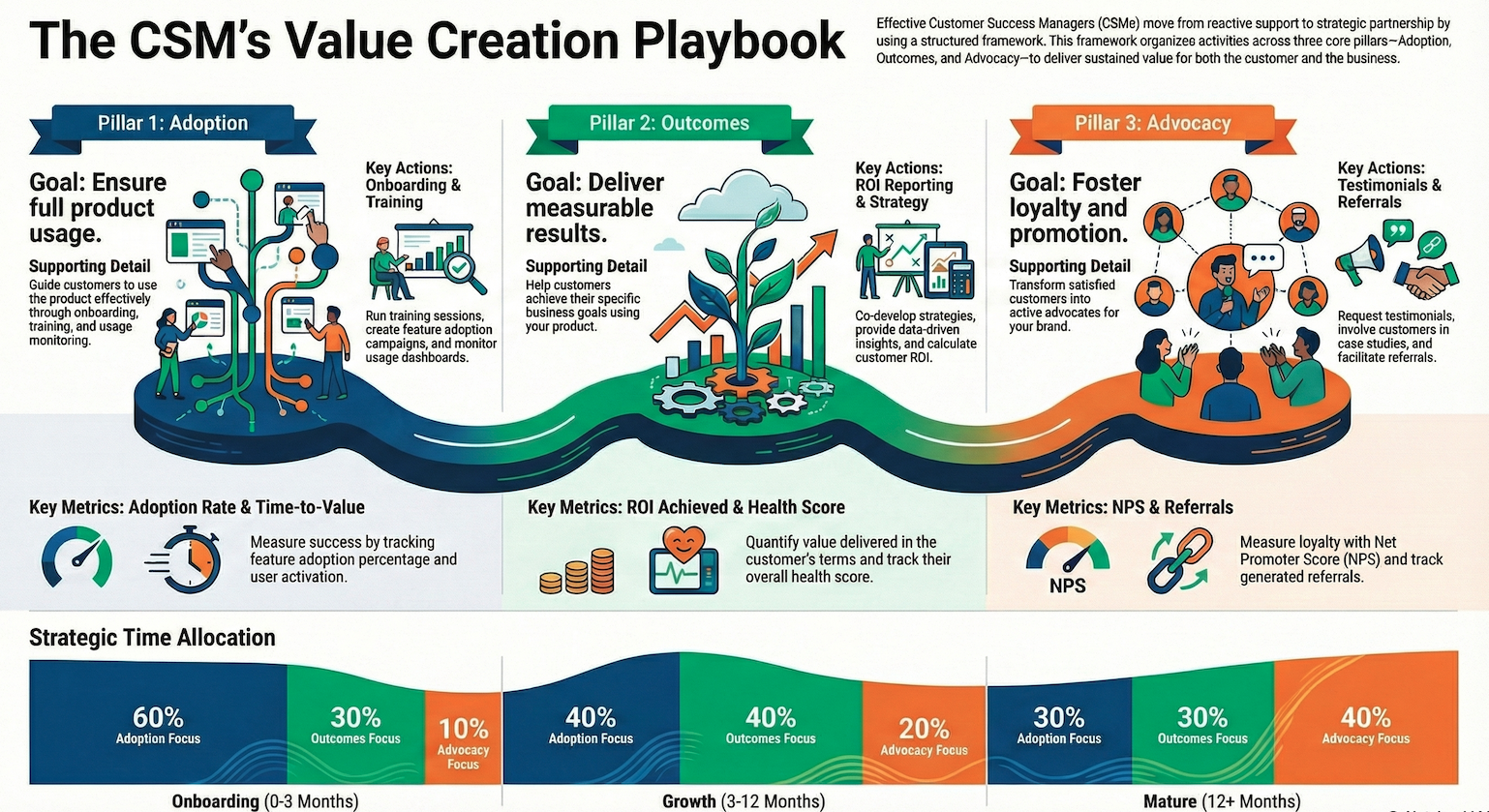
This framework organizes CSM activities across three interdependent pillars that drive customer and business success.
━━━━━━━━━━━━━━━━━━━━━━━━━━━━━━━━━━━━━━
The Three Pillars of Value Creation
| Pillar | Objective | Key Actions | Success Metrics |
|---|---|---|---|
| Adoption | Ensure customers adopt and use the product fully | Onboarding, training sessions, feature adoption campaigns, usage monitoring | Feature adoption rates, time-to-value (TTV), activation percentage |
| Outcomes | Deliver measurable results that align with customer goals | Monitor metrics, co-develop strategies, provide data-driven insights, ROI reporting | ROI achieved, customer health score, business results delivered |
| Advocacy | Foster loyalty and promote customer advocacy | Build trust, request testimonials, involve in case studies, facilitate referrals | Net Promoter Score (NPS), customer referrals, testimonials, reference customers |
How to Allocate Time Across Pillars
Time allocation should shift based on customer maturity:
Months 0-3 (Onboarding Phase):
- 60% Adoption (get them using core features)
- 30% Outcomes (show early wins)
- 10% Advocacy (build relationship foundation)
Months 3-12 (Growth Phase):
- 40% Adoption (expand feature usage)
- 40% Outcomes (demonstrate ROI)
- 20% Advocacy (identify expansion and references)
Months 12+ (Mature Phase):
- 30% Adoption (maintain engagement)
- 30% Outcomes (ongoing value delivery)
- 40% Advocacy (testimonials, upsells, referrals)
Example: A CSM managing a portfolio of 60 accounts segments their time: 20 new customers (60% adoption focus), 25 growth-stage customers (balanced approach), 15 mature customers (advocacy and expansion focus). This strategic allocation improved overall NRR from 102% to 118%.
💡 Pro Tip: Review your customer portfolio monthly and categorize each account by maturity stage. Then allocate your weekly calendar accordingly - don't treat all customers the same. Mature, happy customers need less hand-holding and more strategic partnership.
━━━━━━━━━━━━━━━━━━━━━━━━━━━━━━━━━━━━━━
Practical Application of the Framework
Adoption Pillar in Action
Scenario: Enterprise customer onboarding with 50 users across 3 departments
CSM Actions:
- Created role-based onboarding tracks (admin, analyst, executive)
- Ran weekly training sessions for first 6 weeks
- Monitored usage dashboard daily for struggling users
- Celebrated first wins with executives (sent success summary at Day 30)
- Identified power users and created internal champion program
Outcome: 85% user activation by Day 60 (vs. 50% company average)
Outcomes Pillar in Action
Scenario: SaaS analytics platform customer achieving ROI
CSM Actions:
- Tracked customer's stated goal (reduce reporting time by 40%)
- Measured baseline before full adoption (20 hours/week on manual reports)
- Monitored progress through usage data and check-ins
- Documented outcome achieved (12 hours/week after automation = 40% reduction)
- Created ROI calculation ($50/hour × 8 hours saved × 52 weeks = $20,800 annual value)
Outcome: Used in renewal presentation and customer became case study
Advocacy Pillar in Action
Scenario: Satisfied customer with strong results
CSM Actions:
- Requested NPS feedback after major milestone achievement
- Asked for LinkedIn recommendation highlighting specific outcomes
- Invited customer to speak at user conference
- Introduced customer to Sales for reference call with prospect
- Featured customer in case study on website
Outcome: Customer became advocate, provided 3 referrals worth $180k pipeline
💡 Pro Tip: Don't wait until renewal to ask for advocacy. Request testimonials immediately after wins ("Your team just hit 90% adoption - mind sharing a quick quote about the onboarding experience?"). Strike while success is fresh and enthusiasm is high.
━━━━━━━━━━━━━━━━━━━━━━━━━━━━━━━━━━━━━━
Key Metrics for Measuring Value Creation
Adoption Metrics
- Feature adoption rate - Percentage of available features actively used
- Time-to-first-value (TTFV) - Days until customer achieves initial success milestone
- User activation percentage - Portion of purchased seats actively using product
- Engagement frequency - Login rates, session duration, feature depth usage
Target Benchmarks:
- Enterprise: 70%+ feature adoption, <30 days TTFV
- Mid-Market: 60%+ feature adoption, <45 days TTFV
- SMB: 50%+ feature adoption, <14 days TTFV
Outcomes Metrics
- ROI delivered - Quantified value in customer's business metrics
- Customer health score - Composite metric of usage, satisfaction, and outcomes
- Renewal rate - Percentage of customers renewing contracts
- Contract expansion - Growth in account value over time
Advocacy Metrics
- Net Promoter Score (NPS) - Likelihood to recommend on 0-10 scale
- Customer referrals - Number of qualified leads provided by customers
- Testimonials and case studies - Willing advocacy participants
- Reference calls - Customers available to speak with prospects
Example: A SaaS platform tracked a customer's ROI improvements (35% efficiency gain) after adopting their analytics module, resulting in a glowing testimonial and an upsell opportunity worth $40k ARR.
━━━━━━━━━━━━━━━━━━━━━━━━━━━━━━━━━━━━━━
Best Practices for Value Creation Frameworks
- Map activities to value pillars → Ensure every customer interaction advances Adoption, Outcomes, or Advocacy
- Shift time allocation by maturity → 60% adoption during onboarding, 40% advocacy for mature customers
- Measure all three pillars → Track feature adoption, ROI delivered, and NPS/referrals to demonstrate comprehensive value
- Create proactive engagement rhythm → QBRs, health score reviews, and strategic check-ins prevent reactive firefighting
- Segment customers by tier → High-touch for enterprise (weekly), mid-touch for growth (monthly), low-touch for SMB (automated + quarterly)
- Document value continuously → Capture wins, metrics, and outcomes in real-time for renewal conversations and advocacy asks
- Align customer and business value → Find opportunities where customer success naturally drives company revenue growth
━━━━━━━━━━━━━━━━━━━━━━━━━━━━━━━━━━━━━━
PART 3: CREATING LONG-TERM VALUE BEYOND INDIVIDUAL INTERACTIONS
Great CSMs think beyond single touchpoints to build sustainable value over the customer lifetime.
━━━━━━━━━━━━━━━━━━━━━━━━━━━━━━━━━━━━━━
Scalable Strategies for Long-Term Impact
Customer Segmentation and Tiered Engagement
CSMs use segmentation to provide tailored engagement for different customer tiers:
High-Touch (Enterprise/Strategic):
- Criteria: >$100k ARR, strategic accounts, high growth potential
- Engagement: Weekly check-ins, quarterly business reviews, dedicated resources
- CSM:Customer Ratio: 1:10-20 accounts
- Value Focus: Deep partnership, expansion, executive relationships
Mid-Touch (Growth Accounts):
- Criteria: $25k-100k ARR, solid adoption, moderate complexity
- Engagement: Monthly check-ins, bi-annual business reviews, group training
- CSM:Customer Ratio: 1:40-60 accounts
- Value Focus: Consistent engagement, efficiency, selective expansion
Low-Touch (SMB/Volume):
- Criteria: <$25k ARR, simple use cases, self-sufficient
- Engagement: Automated campaigns, quarterly check-ins, on-demand support
- CSM:Customer Ratio: 1:100-200 accounts
- Value Focus: Automation, self-service, scaled success
Example: A CSM team managing 500 customers segmented into 50 high-touch, 200 mid-touch, 250 low-touch. By automating low-touch engagement (email campaigns, resource libraries) and focusing CSM time on high/mid-touch accounts, they increased NRR from 95% to 108% while maintaining same team size.
💡 Pro Tip: Segment customers quarterly, not just once. Accounts move between tiers based on ARR changes, engagement levels, and strategic importance. A previously low-touch customer that just got Series B funding should move to mid or high-touch.
━━━━━━━━━━━━━━━━━━━━━━━━━━━━━━━━━━━━━━
Proactive Communication Strategies
Anticipating Customer Needs
Proactive Communication Examples:
Usage-Based Proactivity:
- "I noticed your team's usage increased 40% this month - let's discuss adding seats before you hit capacity"
- "You're using Feature X heavily - customers with similar patterns find Feature Y valuable. Want a demo?"
Time-Based Proactivity:
- "Quarter-end approaching - here's how other customers use our reporting for board presentations"
- "Renewal in 90 days - let's schedule QBR to review value delivered this year"
Industry-Based Proactivity:
- "New regulation affecting your industry - here's how our compliance features can help"
- "Noticed trend in your sector - 3 similar companies adopted this workflow successfully"
Success-Based Proactivity:
- "You've achieved great results - would you be open to being a reference customer?"
- "Your ROI metrics are impressive - let's discuss how to share this as a case study"
Example: A CSM preemptively suggested feature updates and integrations based on customer usage data patterns. This proactive approach prevented 5 churn risks and identified 8 expansion opportunities worth $120k ARR over 6 months.
💡 Pro Tip: Create a "Proactive Outreach Calendar" for each customer segment. Set recurring reminders for: Usage reviews (weekly), health score checks (bi-weekly), strategic QBRs (quarterly), renewal prep (120 days before). Never rely on memory - systematize proactivity.
━━━━━━━━━━━━━━━━━━━━━━━━━━━━━━━━━━━━━━
Long-Term Alignment with Product Evolution
Keeping Customers Engaged as Products Evolve
Strategies for long-term alignment:
Product Roadmap Communication:
- Share upcoming features relevant to customer's stated goals
- Explain how roadmap addresses feedback they previously shared
- Beta test opportunities for engaged customers
- Sunset planning for deprecated features with migration paths
Continuous Value Demonstration:
- Show how new features solve problems they mentioned months ago
- Track cumulative value over customer lifetime, not just current quarter
- Reference long-term partnership and investment in their success
- Position renewals as continuation of journey, not re-evaluation
Example: A CSM worked with Product team when a frequently requested feature was prioritized. They notified all 15 customers who'd requested it, invited them to beta test, and incorporated their feedback. This created strong advocacy, prevented potential churns, and resulted in 3 case studies.
💡 Pro Tip: Maintain a "Customer Wish List" document for each strategic account. When their requested features ship, immediately notify them with personalized demo. This shows you listen, remember, and deliver - building incredible loyalty and renewal certainty.
━━━━━━━━━━━━━━━━━━━━━━━━━━━━━━━━━━━━━━
Best Practices for Long-Term Value Creation
- Segment customers strategically → Allocate CSM time based on ARR, growth potential, and complexity (high/mid/low-touch tiers)
- Automate low-touch engagement → Use email campaigns, resource libraries, and self-service for smaller accounts
- Anticipate needs proactively → Monitor usage patterns, industry trends, and customer growth to suggest relevant solutions
- Maintain long-term customer context → Document wishes, pain points, and goals to reference in future conversations
- Align with product roadmap → Share relevant upcoming features and involve engaged customers in beta testing
- Think lifetime value, not quarter → Build relationships that extend beyond current contract period
- Scale through systems → Create repeatable processes, playbooks, and automation that allow managing larger portfolios
━━━━━━━━━━━━━━━━━━━━━━━━━━━━━━━━━━━━━━
REAL-WORLD APPLICATION
Case Study: Value Creation Framework Drives 40% NRR Improvement
Quarter 1: Unfocused Approach A CS team of 5 CSMs managing 200 accounts had no structured value framework. CSMs spent time evenly across all customers regardless of tier, focused on being "helpful" without measuring outcomes, and tracked only basic renewal rates.
Results: 92% GRR, 98% NRR, 25% of CSM time spent on low-value admin
Quarter 2: Implementing Value Creation Framework
- Segmented customers into high/mid/low-touch tiers
- Implemented three-pillar framework (Adoption, Outcomes, Advocacy)
- Created time allocation guidelines by customer maturity
- Started tracking metrics for each pillar
- Automated low-touch customer engagement with targeted campaigns
Quarter 3: Optimization and Scaling
- Refined segmentation based on actual engagement and ARR
- Built playbooks for each pillar's activities
- Trained team on proactive communication strategies
- Established monthly value creation metric reviews
Quarter 4: Measurable Impact
- GRR: Improved to 95% (+3 points)
- NRR: Improved to 118% (+20 points!)
- Expansion revenue: $450k from proactive upsells
- Customer advocacy: 12 new case studies, 8 conference speakers
- CSM efficiency: 40% reduction in low-value admin time
Results After 12 Months:
✓ NRR increased 20 percentage points through systematic value creation
✓ Generated $450k in expansion revenue from proactive opportunity identification
✓ Reduced CSM burnout by eliminating unfocused "helping" and adding structure
✓ Created 12 customer advocates who became reference customers
✓ Proved CS team ROI: $450k expansion + $500k churn prevented = $950k impact on team cost of $750k
Key Strategies Used:
- Applied three-pillar framework systematically across all accounts
- Segmented customers and allocated time strategically by tier
- Measured all three value pillars, not just renewals
- Automated low-touch engagement to focus on high-value activities
- Built repeatable playbooks that scaled across team
━━━━━━━━━━━━━━━━━━━━━━━━━━━━━━━━━━━━━━
KEY TAKEAWAYS: BEST PRACTICES RECAP
✓ Value creation operates across three pillars: Adoption (product usage), Outcomes (measurable results), and Advocacy (loyalty and referrals)
✓ Allocate time strategically based on customer maturity: 60% adoption for new customers, 40% advocacy for mature accounts
✓ Customer-centric value means achieving THEIR goals in THEIR metrics - efficiency, cost savings, or revenue growth
✓ Business-centric value aligns customer success with NRR, expansion revenue, and company growth objectives
✓ Segment customers into tiers (high/mid/low-touch) and allocate CSM time based on ARR and strategic importance
✓ Automate low-touch customer engagement through campaigns, knowledge bases, and self-service resources
✓ Measure value across all three pillars using: feature adoption rates, ROI delivered, health scores, NPS, and referrals generated
✓ Proactive communication anticipates needs through usage monitoring, industry trends, and strategic check-ins
✓ Maintain long-term customer context by documenting wishes, goals, and pain points for future conversations
✓ Think lifetime value over quarters - build relationships extending beyond current contract periods